Embodied cognition yields interpretable trajectory predictions for bioengineer.org July 9, 2026, 9:15 p.m.
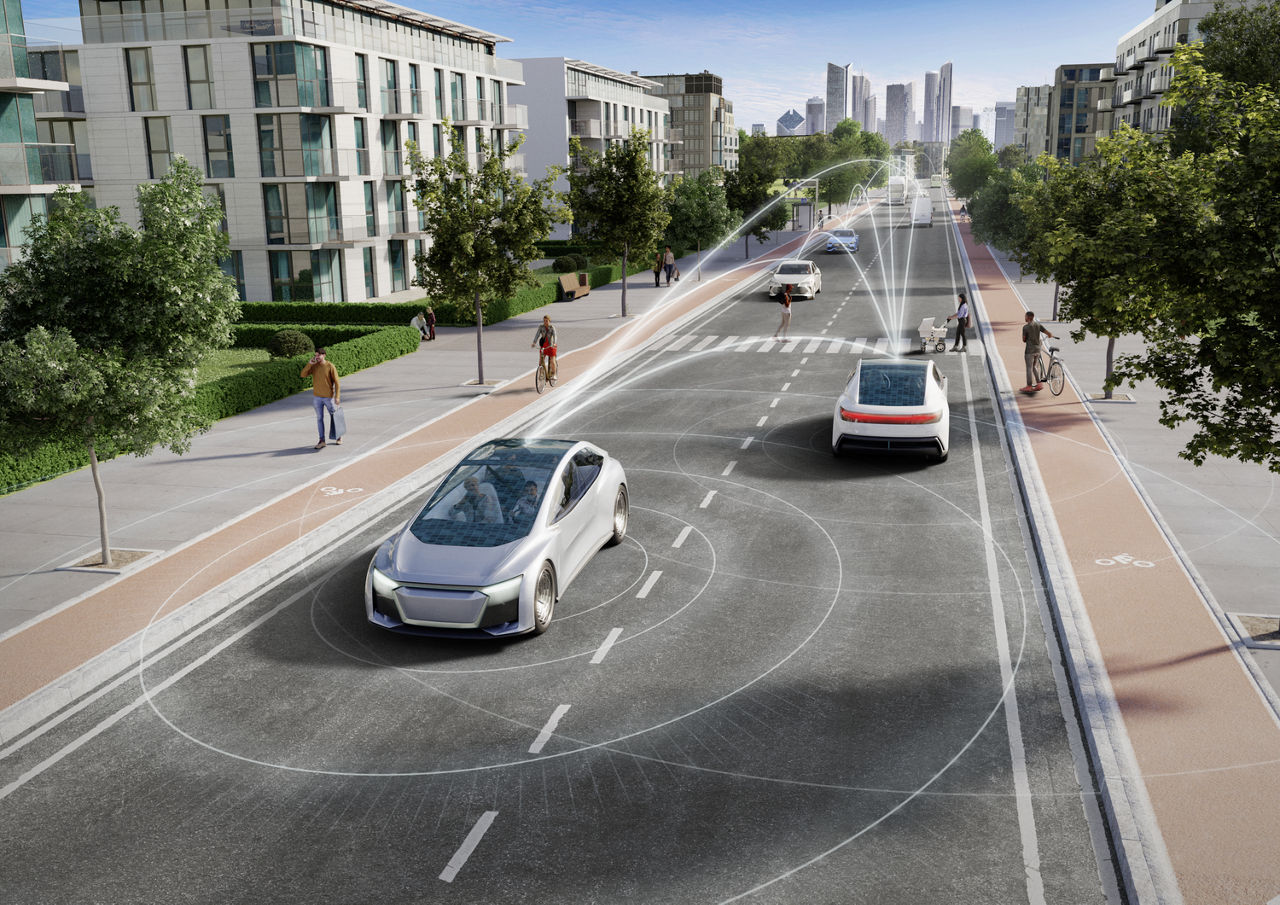
Researchers have developed a novel approach to trajectory prediction for autonomous systems by incorporating principles of embodied cognition. Rather than relying on opaque deep learning models that cannot explain their decisions, the new framework enables machines to reason about motion by simulating physical interactions, similar to how athletes anticipate movements. Published in Nature Communications, this study demonstrates that trajectory prediction systems can achieve interpretable and reliable predictions by embedding generative internal models that understand motion through simulated bodily experience, addressing critical safety concerns in autonomous vehicles and robots.
People Used to Control Machines. They Don’t Anymore www.wired.com July 9, 2026, 9:14 p.m.
IF GRATIFICATION IS so easy, why don’t you feel more gratified already? Because it’s gotten harder. It’s still easy to experience individual feats of gratification when you find them (or they find you). But the ordinary circumstances that once produced so much gratification have gradually receded. Unseen choices in design, business, and social life have made it harder for you to engage directly with the sensory world.
Consumers Embrace Driverless Delivery, But Infrastructure Lags www.forbes.com July 9, 2026, 9:13 p.m.
Self-driving vehicles are increasingly appearing at private properties like malls and restaurants for pickups, causing chaos due to a lack of coordinated infrastructure. This burgeoning "autonomous commerce" channel, with the last-mile delivery market projected to exceed $50 billion by 2028, demands new management solutions. Autolane is addressing this by providing a platform that acts as "air traffic control" for autonomous vehicles on private land, offering communication, coordination, and control. While the U.S. market focuses on private sector solutions, Singapore leads in public sector autonomous delivery, highlighting global efforts to integrate these technologies despite a fragmented market landscape.
L’électrochoc Chinois : Les équipementiers Et Les Constructeurs Européens Sous Pression lenouvelautomobiliste.fr July 9, 2026, 9:12 p.m.
Pendant longtemps, l’Europe faisait de la Chine un de ses principaux leviers de croissance. Mais, comme disait MC Solaar : les temps changent. Les constructeurs chinois gagnent des parts de marché en Europe, les équipementiers voient émerger de nouveaux concurrents redoutables, les batteries sont devenues un enjeu de souveraineté et les partenariats sino-européens se multiplient.
NHTSA Slams Self-Driving Cars For Blocking Fire Trucks And Ambulances hothardware.com July 9, 2026, 9:08 p.m.
This governmental pressure follows mounting frustration from municipal leaders and frontline emergency workers who report that robotaxis are increasingly disrupting life-saving operations. While autonomous vehicle technology has been championed as a way to reduce human traffic errors, internal feedback from cities like San Francisco and Austin paints a drastically different picture. First responder leaders revealed to regulators that the performance of driverless fleets, particularly Waymo, appears to be actively "backsliding." Vehicles are frequently committing traffic violations, freezing up on active roads, and failing to decode basic safety markers.
Prophesee and Volkswagen Use Brain-Inspired AI to Make Self-Driving Cars Faster and Safer www.analyticsinsight.net July 9, 2026, 9:07 p.m.
Prophesee and Volkswagen are collaborating to integrate neuromorphic computing and event-based vision technology into autonomous vehicles, creating perception systems that mirror human-like cognition. Unlike traditional cameras that process every pixel continuously, brain-inspired sensors activate only when detecting meaningful visual changes, substantially reducing latency, power consumption, and computational load. This innovation enables faster detection of pedestrians, obstacles, and hazards across challenging conditions, including poor lighting and adverse weather. The partnership aims to enhance self-driving vehicle safety and scalability by enabling machine-level consistency with human-like responsiveness, advancing real-world autonomous driving performance globally.
Elon Musk and the Lidar Debate: What Comes Next? www.aeye.ai July 5, 2026, 2:25 p.m.
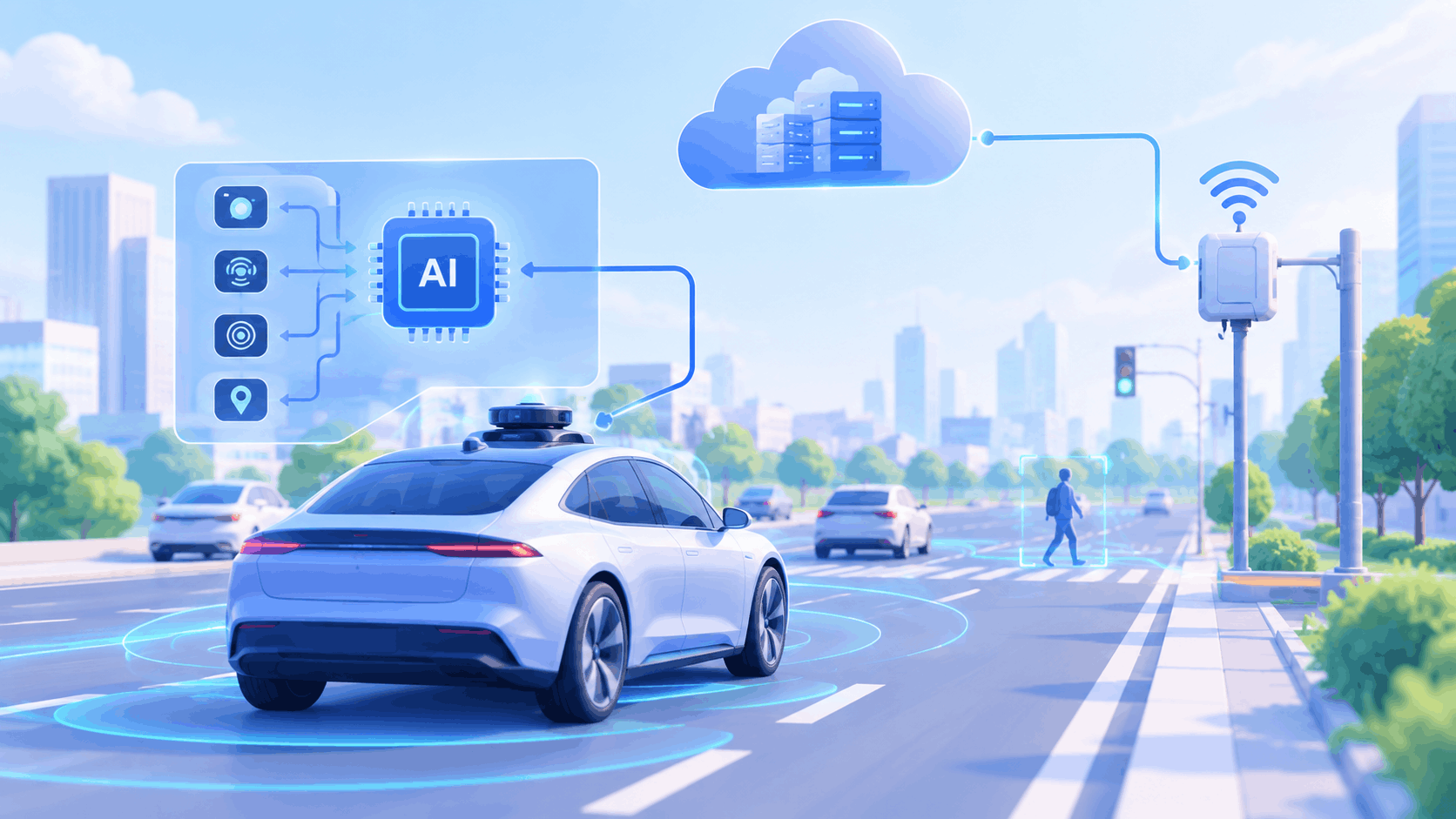
For years, the autonomous vehicle industry was consumed by a debate: cameras versus lidar, lidar versus radar, vision-only versus sensor fusion. Few voices were louder than Elon Musk’s. In 2019, Musk famously referred to lidar as a “crutch” and a “fool’s errand”, arguing that camera-based systems alone would ultimately be sufficient for autonomous driving. At the time, the comment sparked endless debate across the automotive and technology industries. Supporters of lidar argued that precise 3D measurements were essential for safe autonomy. Vision-only advocates countered that cameras, combined with increasingly powerful AI, could provide all the information a vehicle needed to navigate the world. Years later, however, the conversation has evolved. The question is no longer whether vehicles should use lidar, radar, cameras, or some combination of sensors. Instead, the industry is increasingly focused on a more important challenge: how sensing, AI, and computers work together to help machines safely understand and interact with the physical world. The future is not about choosing a single sensor. It’s about building perception systems capable of delivering reliable, real-time understanding of complex environments. 
The Cost of Self-Driving Technology: How Much Do AV Components Really Cost? (Market Breakdown) patentpc.com July 5, 2026, 2:24 p.m.
Self-driving technology is one of the most exciting advancements in the automotive industry. While it promises safer roads and greater convenience, the price of developing and implementing autonomous vehicles (AVs) is incredibly high. From advanced sensors to powerful computing platforms, every part of an AV comes with a hefty price tag. In this article, we will break down the costs of self-driving technology, component by component, so you can understand where the money goes and what this means for the future of transportation.
Other vehicle trajectories are also needed  dl.acm.org July 5, 2026, 2:23 p.m.
Advanced end-to-end autonomous driving systems predict other vehicles' motions and plan ego vehicle's trajectory. The world model that can foresee the outcome of the trajectory has been used to evaluate the autonomous driving system. However, existing world models predominantly emphasize the trajectory of the ego vehicle and leave other vehicles uncontrollable. This limitation hinders their ability to realistically simulate the interaction between the ego vehicle and the driving scenario. In this paper, we propose a driving World Model named EOT-WM, unifying Ego-Other vehicle Trajectories in videos for driving simulation. Specifically, it remains a challenge to match multiple trajectories in the BEV space with each vehicle in the video to control the video generation. We first project ego-other vehicle trajectories in the BEV space into the image coordinate for vehicle-trajectory match via pixel positions.
NVIDIA Alpamayo: Open AI for Robotaxis and Autonomous Vehicles www.nvidia.com July 5, 2026, 1 p.m.
NVIDIA Alpamayo, a COMPUTEX Best Choice Award winner, represents a comprehensive open-source platform engineered to accelerate autonomous vehicle development. The system integrates vision-language-action models, simulation frameworks, reinforcement learning infrastructure, and physical AI datasets to enable Level 4 autonomy capabilities. Alpamayo empowers vehicles to perceive, reason, and respond with human-like judgment, particularly in rare and complex driving scenarios. By prioritizing reasoning-based decision-making over rigid rule-based systems, the platform advances safer, more transparent autonomous driving solutions at scale while promoting openness and accountability in the autonomous vehicle industry.
Reinventing autonomous driving in the age of generative AI www.mckinsey.com June 29, 2026, 4:08 a.m.
Explore how AI-native architectures are redefining ADAS competition across semiconductors, AI software, and data infrastructure landscape.
The $12.8B race to run AV fleets, WeRide & Uber to launch ... avmarketstrategist.substack.com June 29, 2026, 4:08 a.m.
Mobileye said it will launch a direct-to-consumer robotaxi service in a major US city in 2027. It starts small, an initial fleet of roughly 100 vehicles phased ...
Pony.ai's Robotaxi Business Hits Record Growth In Q1 2026 electriccarsreport.com June 29, 2026, 4:08 a.m.
Pony.ai posted record Robotaxi revenue in Q1 2026, raised fleet targets to 3500 vehicles, and accelerated expansion across China, Europe, and the Middle ...
Learning to drive like a human wayve.ai June 22, 2026, 3:49 p.m.
Humans have a remarkable ability to learn to drive quickly and can obtain a licence to drive across a whole country after tens of hours of practice. But after 10 years of commercial self-driving car development, over 10 million autonomous miles and $5B per year spent, we still do not have commercial self-driving vehicles on our roads. To turn what is currently a fantasy into a reality, we need to take a different approach.
DriveTDPA: Trajectory-Decision Preference Alignment for Vision ... www.mdpi.com June 22, 2026, 9:50 a.m.
Autonomous driving planning requires not only accurate trajectory prediction but also coherent semantic alignment across perception, decision making, ...
Barriers to autonomous vehicles adoption in Europe: Insights from literature and interviews www.sciencedirect.com June 15, 2026, 8:52 a.m.
Autonomous driving in Europe faces a multifaceted array of challenges, but our review indicates that these challenges are well-understood and, with concerted effort, can be addressed. The implications of these findings are significant. In the short term, the persistence of regulatory uncertainty, technical limitations, and public scepticism means that fully self-driving vehicles will likely roll out slower in Europe than the most bullish predictions once suggested. Stakeholders must navigate a delicate balance between innovation and caution, since premature deployment could erode trust if incidents occur, whereas excessive delay could cause Europe to fall behind in a transformative industry. In the long term, overcoming these barriers is crucial because the potential benefits of AVs - from dramatically reduced traffic accidents and enhanced mobility for the elderly or disabled, to more efficient logistics and reduced congestion - are substantial. Failure to resolve the impediments could mean foregone benefits in safety and economic efficiency, not to mention Europe’s competitiveness in the global automotive arena.
Stellantis signs Europe joint venture with China's Dongfeng www.france24.com June 15, 2026, 8:50 a.m.
The company announced earlier this month a deal with Dongfeng to build Jeep and Peugeot models for the Chinese market and increase cooperation on technology research and development.Dongfeng and other Chinese carmakers meanwhile are looking to Europe and other export markets as their home market remains tough, with consumer spending slumping.Brands such as BYD, Chery, Geely, Leapmotor, Jaecoo, and XPeng were virtually unknown three years ago in Europe.
Stellantis' China Gamble Could Reshape America's Auto Industry ... carcoachreports.substack.com June 15, 2026, 8:45 a.m.
Stellantis plans to cut more than 800,000 units of manufacturing capacity in Europe while aggressively restructuring global production around efficiency and ...
The world's carmakers are struggling to compete with China www.bbc.co.uk June 15, 2026, 7:56 a.m.
The BBC visited China’s EV factories and found they are dominating the ecosystems shaping the global auto industry.
Volkswagen to cut 19,000 jobs by end of 2026 www.automotiveworld.com June 15, 2026, 7:53 a.m.
Both the 19,000 and 28,000 figures sit within a broader group-wide target of 50,000 job cuts across Germany by 2030, covering the core Volkswagen brand, Audi, Porsche and software subsidiary Cariad. The scale of the cuts reflects the depth of VW’s financial deterioration: operating profit fell 53% to €8.9bn (US$10.3bn) in 2025, net profit dropped 44% to €6.9bn and the group’s operating margin compressed to 2.8%—its worst since the Dieselgate crisis.