NVIDIA, TSMC use AI to boost chip manufacturing www.stocktitan.net June 15, 2026, 6:03 a.m.
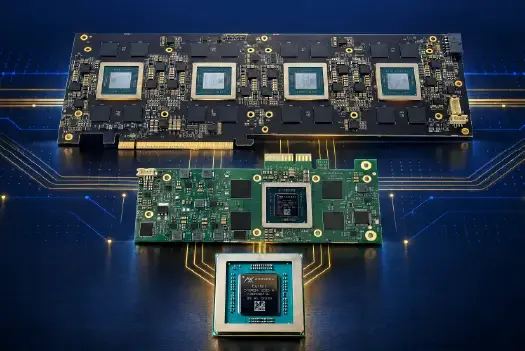
NVIDIA and TSMC are leveraging artificial intelligence and accelerated computing to revolutionize semiconductor manufacturing. NVIDIA's CUDA-X libraries, Metropolis platform, and TAO Toolkit are being deployed across TSMC's production operations to enhance lithography simulation, transistor modeling, process control, and wafer inspection. These advanced AI systems enable automated defect detection at the nanometer scale while reducing manual labeling requirements. By integrating AI throughout the semiconductor design and manufacturing lifecycle, TSMC achieves improved turnaround times, enhanced energy efficiency, increased yield rates, and optimized fab operations. This collaboration between the two technology leaders addresses complex computational challenges inherent in advancing chip production to increasingly sophisticated nodes.
NVIDIA and TSMC Bring AI Into Fabs to Advance Semiconductor Design ... nvidianews.nvidia.com June 15, 2026, 6:03 a.m.
NVIDIA and TSMC are leveraging accelerated computing and artificial intelligence to revolutionize semiconductor design and manufacturing processes. As chip technology advances to more complex nodes, the industry faces unprecedented computational challenges in areas including computational lithography, transistor simulation, process control, and wafer inspection. TSMC is deploying NVIDIA's AI and accelerated computing solutions across its fab operations to enhance turnaround times, energy efficiency, yield rates, and overall operational productivity. This strategic partnership, spanning nearly three decades, represents a significant advancement in addressing the world's most complex design and manufacturing challenges through simulation, optimization, and AI-driven systems capable of supporting physics-based and image analysis applications simultaneously.
Transformative frontiers of photonics for next-generation optical ... link.springer.com June 15, 2026, 6:03 a.m.
Photonics represents a transformative frontier in advancing next-generation optical communication networks. This open-access perspective article, published in May 2026, explores emerging technologies and innovations that leverage photonic principles to enhance data transmission capabilities. The research examines how photonic systems can address current limitations in optical communications, enabling faster, more efficient information transfer. By integrating cutting-edge photonic solutions, these networks promise substantial improvements in bandwidth capacity and system reliability. The article provides valuable insights for professionals seeking to understand the technological evolution of communication infrastructure and its implications for future digital connectivity.
Quantum networks: A new era of interconnectedness www.nsf.gov June 15, 2026, 6:03 a.m.
Quantum networks represent a transformative technological advancement that harnesses quantum mechanical principles to revolutionize data transmission and computational capacity. Unlike classical systems using binary bits, quantum networks employ quantum bits or qubits, which exploit superposition to exist in multiple states simultaneously, and leverage entanglement to create instantaneous connections across distances. By linking quantum computers and ultraprecise sensors, these networks enable geographically distributed systems to operate in concert, delivering unprecedented measurement accuracy and processing power. Applications span earthquake prediction, agricultural monitoring, autonomous GPS-free navigation for emergency responders in challenging environments, and accelerated drug discovery through molecular simulation. Quantum networks fundamentally transcend the limitations of conventional binary-based architectures, offering transformative potential for scientific discovery and practical problem-solving across multiple sectors.
Huawei bets on a new law of physics to outmaneuver chip restrictions www.crnasia.com June 15, 2026, 6:03 a.m.
Huawei has unveiled the Tau Scaling Law and LogicFolding architecture, representing China's ambitious response to US chip export restrictions. Rather than pursuing traditional transistor miniaturization governed by Moore's Law, this framework shifts focus to time scaling—compressing signal travel duration through chips and systems. Presented by Huawei's semiconductor president at the 2026 IEEE symposium, the approach operates across four integrated levels: device, circuit, chip, and system. LogicFolding architecture optimizes critical-path wiring and resistance while UnifiedBus reduces latency in large-scale AI deployments. Huawei claims this methodology will enable high-end chips achieving transistor density equivalent to advanced nodes, effectively circumventing lithography equipment constraints imposed by international restrictions.
Claude Fable 5 et Mythos 5 n'existent plus : le gouvernement américain a ordonné leur suppression immédiate www.lesnumeriques.com June 13, 2026, 9:24 a.m.
C'est du jamais vu dans l'histoire de l'intelligence artificielle et un immense séisme pour la tech. Lancé lundi, désactivé jeudi soir : le gouvernement américain a ordonné à Anthropic de couper l'accès à Fable 5 et Mythos 5, ses deux modèles d'IA les plus avancés, pour l'ensemble de ses clients dans le monde entier, sur fond de faille de sécurité contestée.
Why SpaceX is Building a 100-Megawatt AI Factory in Space? sebastianbarros.substack.com June 11, 2026, 10:36 a.m.
Faced with an exhausted terrestrial power grid, Elon Musk is moving hyperscale AI data centers directly into Low Earth Orbit.
Stable Dual-Functional Coating on Polyurethane Surface by Grafting Antibacterial-Zwitterionic Copolymer pubs.acs.org June 9, 2026, 11:37 a.m.
Medical catheters face certain challenges in clinical treatment, such as bacterial biofilm adhesion and thrombus formation. Antifouling and antibacterial coatings have been proven to be an effective solution to diminish these undesirable events. Herein, we developed a facile and environmentally friendly strategy for constructing a dual-functional coating by grafting an antibacterial-zwitterionic copolymer onto polyurethane (PU) surfaces. The copolymer was designed and synthesized via a one-pot polymerization in an aqueous system by integrating 2-methacryloyloxyethyl phosphorylcholine (MPC), dimethyl diallyl ammonium chloride (DADMAC), and glycidyl methacrylate (GMA) as a functional monomer to enable surface immobilization.
Huawei LogicFolding chip design aims to match 1.4nm by 2031 qz.com June 8, 2026, 9:12 a.m.
The Chinese tech giant says its new stacked-chip architecture can deliver transistor density equivalent to 1.4nm processes by 2031, without access to advanced lithography tools
The Ghost in the Silicon: Tracing the Limits of Machine Mind holistic.news June 8, 2026, 6:03 a.m.
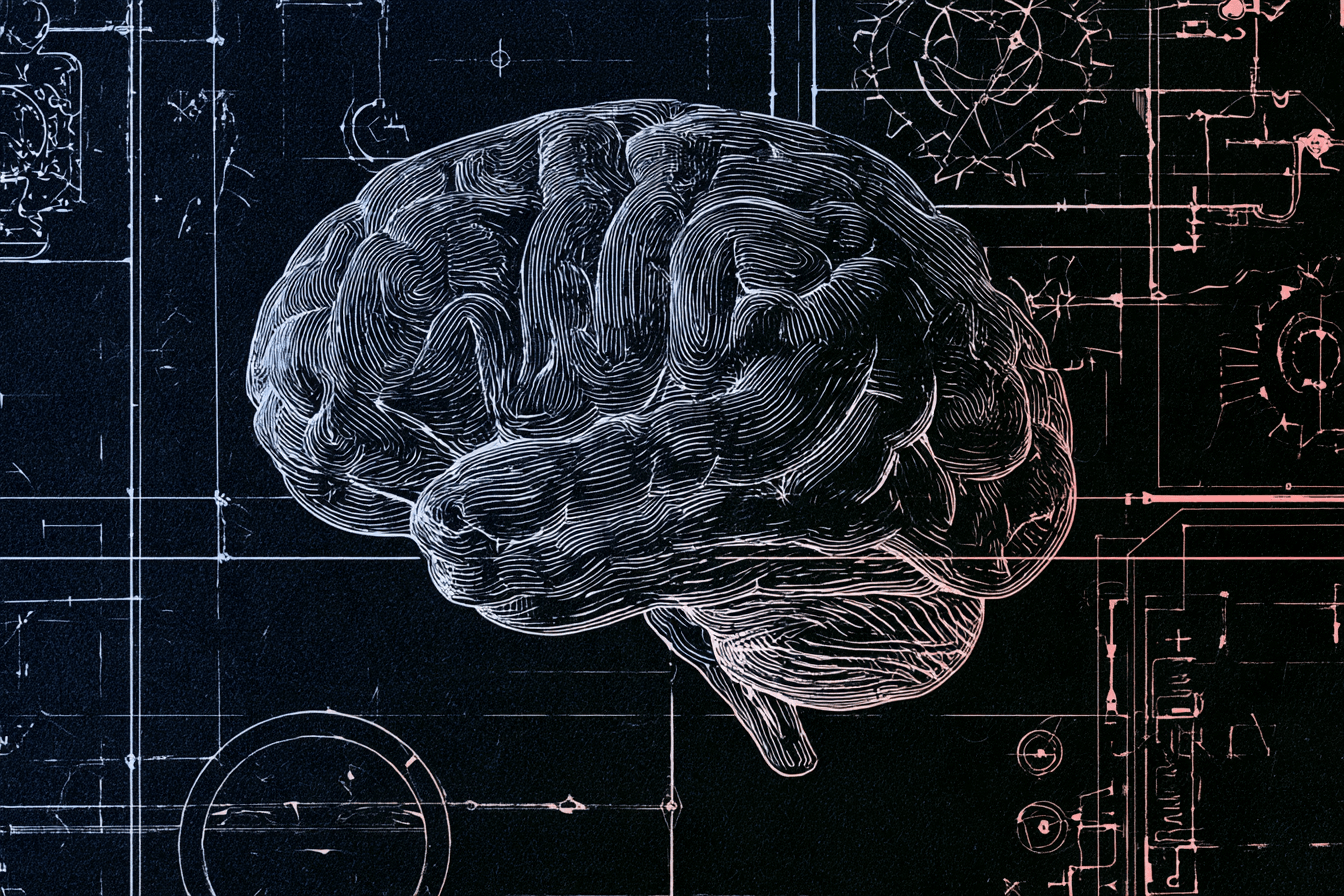
Artificial intelligence presents a fundamental paradox: despite its weightless digital nature, it demands massive physical infrastructure and enormous energy consumption. Researchers from the University of Cambridge and the University at Buffalo have developed an innovative neuromorphic chip that addresses this sustainability challenge by reimagining computer architecture. Unlike conventional systems that separate processing and memory functions, this bio-inspired device simultaneously executes both operations, mirroring human brain functionality. This breakthrough, achieved after nearly three years of experimentation and countless failed attempts, represents a significant departure from classical computing design. By eliminating the inefficient data shuttling inherent in traditional hardware, the new chip offers a sustainable alternative to current systems. The innovation addresses a persistent obstacle in developing environmentally responsible artificial intelligence and demonstrates the potential for hardware design to revolutionize machine cognition while reducing energy consumption.
The Neuromorphic Supremacy arxiv.org June 8, 2026, 6:03 a.m.
This paper presents a novel approach to bridging the performance gap between biological and artificial neural systems by integrating genuine neuromorphic circuits into conventional artificial neural network architectures. The research demonstrates that embedding astrocytic modulation and spiking dynamics—key features of biological neural structures—enables hybrid models to achieve remarkable capabilities. Specifically, these enhanced systems attain high accuracy from minimal training examples per class while maintaining robust performance under challenging conditions including occlusion and impulse noise. The findings suggest that incorporating biologically-inspired neuromorphic components offers a promising pathway to enhance artificial neural networks' learning efficiency and noise resilience, advancing toward achieving neuromorphic supremacy in machine learning applications.
HUAWEI Presents the Tau (τ) Scaling Law, Enabling Breakthroughs ... www.huawei.com June 8, 2026, 6:03 a.m.
Huawei has introduced the Tau (τ) Scaling Law, a novel semiconductor development principle presented at the 2026 IEEE International Symposium on Circuits and Systems. This groundbreaking framework proposes shifting from traditional geometric scaling to time-based scaling as the guiding principle for semiconductor and electronic system evolution. The innovation leverages advanced technologies such as LogicFolding to achieve continuous compression of signal propagation, enabling unprecedented breakthroughs in transistor density and overall system performance. This paradigm represents a significant advancement in semiconductor engineering methodology.
The Truth Behind Huawei's 1.4nm LogicFolding Claim semiwiki.com June 8, 2026, 6:03 a.m.
Huawei recently presented claims regarding its 1.4nm LogicFolding technology at an IEEE conference in March 2026, positioning it as a breakthrough in semiconductor advancement. The company argues that traditional logic scaling has reached limitations, necessitating alternative approaches to increase transistor density. However, the presentation raises significant concerns regarding the accuracy of Huawei's density calculations and the credibility of their research paper, which appears to have been generated using artificial intelligence. Industry experts question whether Huawei's claims substantively advance the field or merely represent marketing positioning ahead of competitors. The presentation introduces concepts like Tau Scaling and LogicFolding architecture, yet lacks the transparency necessary to validate technological superiority claims. These developments warrant careful scrutiny from the semiconductor intelligence community.
How Business Models Can Have a Positive Social Impact financialmodelslab.com June 7, 2026, 10:22 a.m.
You are defintely looking beyond the balance sheet when assessing long-term viability, so we need to define the scope: understanding how various business models interact with and influence societal well-being, whether that means their impact on labor markets, resource consumption, or community stability. In a globalized world, responsible business practices are no longer a niche concern but a core requirement for capital allocation; we're seeing this reflected in the market where assets under management adhering to ESG (Environmental, Social, and Governance) criteria are projected to surpass $40 trillion globally by the end of 2025. This growing importance means we must set the stage for a comprehensive assessment that rigorously analyzes both the positive externalities-like innovative solutions to climate change-and the negative impacts, such as supply chain risks or digital exclusion, ensuring our analysis is grounded in actionable data, not just good intentions.
China's 15th five-year plan and the implications for the OLED display industry www.oled-info.com June 3, 2026, 3:02 p.m.
When China published its 15th Five-Year Plan (FYP, 2026–2030) in March 2026, many assumed that the display industry had been handed another wave of state-level support. The assumption was understandable — but it requires a more careful reading.
Laser comms is the hottest trend: 10 Laser Startups to Watch sebastianbarros.substack.com June 1, 2026, 3:34 p.m.
Yes, Laser is the ultimate communications medium. Physics dictates that transmitting photons through a vacuum offers near-infinite bandwidth with zero latency constraints. But deploying naked lasers on Earth has historically been an exercise in frustration. Atmospheric turbulence, fog, rain, and physical interference forced the industry to wrap light in glass cables or default to the reliable, albeit slower, medium of radio frequencies.For decades, Free Space Optics, or FSO, was dismissed as a fragile science experiment, and, to some extent, the case was officially closed.Laser communications are back, driven by an explosion of technology developments and critical infrastructure needs that were once far from mainstream. Today, lasers are taking over every single layer of the network topology simultaneously, building a seamless architecture from space down to the terrestrial core. In orbit, optical inter-satellite links are creating massive mesh networks in a vacuum to route data globally.
The Rise of Edible Packaging www.2013packagingjamboree.com June 1, 2026, 1:49 p.m.
The way we transport food is undergoing a profound transformation as sustainable alternatives step into the spotlight. For decades, the global supply chain has relied heavily on single-use plastics to keep items fresh and safe. However, the environmental toll of this convenience has sparked a frantic search for better solutions. Enter edible packaging, an innovative approach that eliminates waste by ensuring the wrapper itself can be consumed or composted. This breakthrough technology represents a significant shift in manufacturing, offering a practical method to reduce our reliance on synthetic polymers. By reimagining how we protect groceries, researchers are creating a system where nothing is left behind.
History of QR Code: How One Grid Changed the World thecampusreview.com June 1, 2026, 10:14 a.m.
Explore the history of QR code systems, from 1990s auto plants to global fintech ubiquity. Discover how this elegant grid changed the world.
Huawei plans 1.4-nm chips by 2031, Kirin 2026 Chip: 238 MTr/mm2 transistor density rivaling TSMC’s 3nm semiwiki.com June 1, 2026, 9:10 a.m.
In a major bid to bypass crippling U.S. technology sanctions, China’s Huawei Technologies has unveiled an ambitious semiconductor roadmap, projecting the design of high-end chips with a transistor density equivalent to a 1.4-nanometer (1.4-nm) process node by 2031.The announcement was made on Monday, May 25, 2026, by He Tingbo—President of Huawei’s HiSilicon semiconductor division and chair of the company’s Scientist Committee—during a keynote speech at the 2026 IEEE International Symposium on Circuits and Systems (ISCAS) in Shanghai.
Huawei plans 1.4-nm chips by 2031, Kirin 2026 Chip semiwiki.com June 1, 2026, 9:05 a.m.
Huawei has announced an ambitious semiconductor roadmap aimed at circumventing U.S. technology sanctions, with plans to develop chips featuring 1.4-nanometer process technology by 2031. The company's HiSilicon division revealed these objectives during a keynote presentation at the 2026 IEEE International conference. Notably, Huawei's upcoming Kirin 2026 chip is expected to achieve a transistor density of 238 million transistors per square millimeter, comparable to TSMC's advanced 3-nanometer technology. This strategic initiative underscores China's commitment to achieving semiconductor independence and technological advancement in the face of international trade restrictions.