Linux Foundation, NVIDIA Want 6G Open Source. Washington Agrees. sebastianbarros.substack.com March 1, 2026, 2:53 p.m.
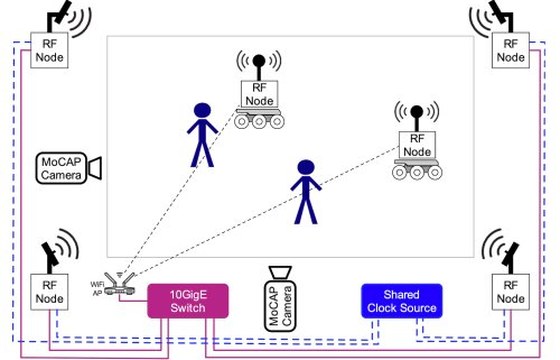
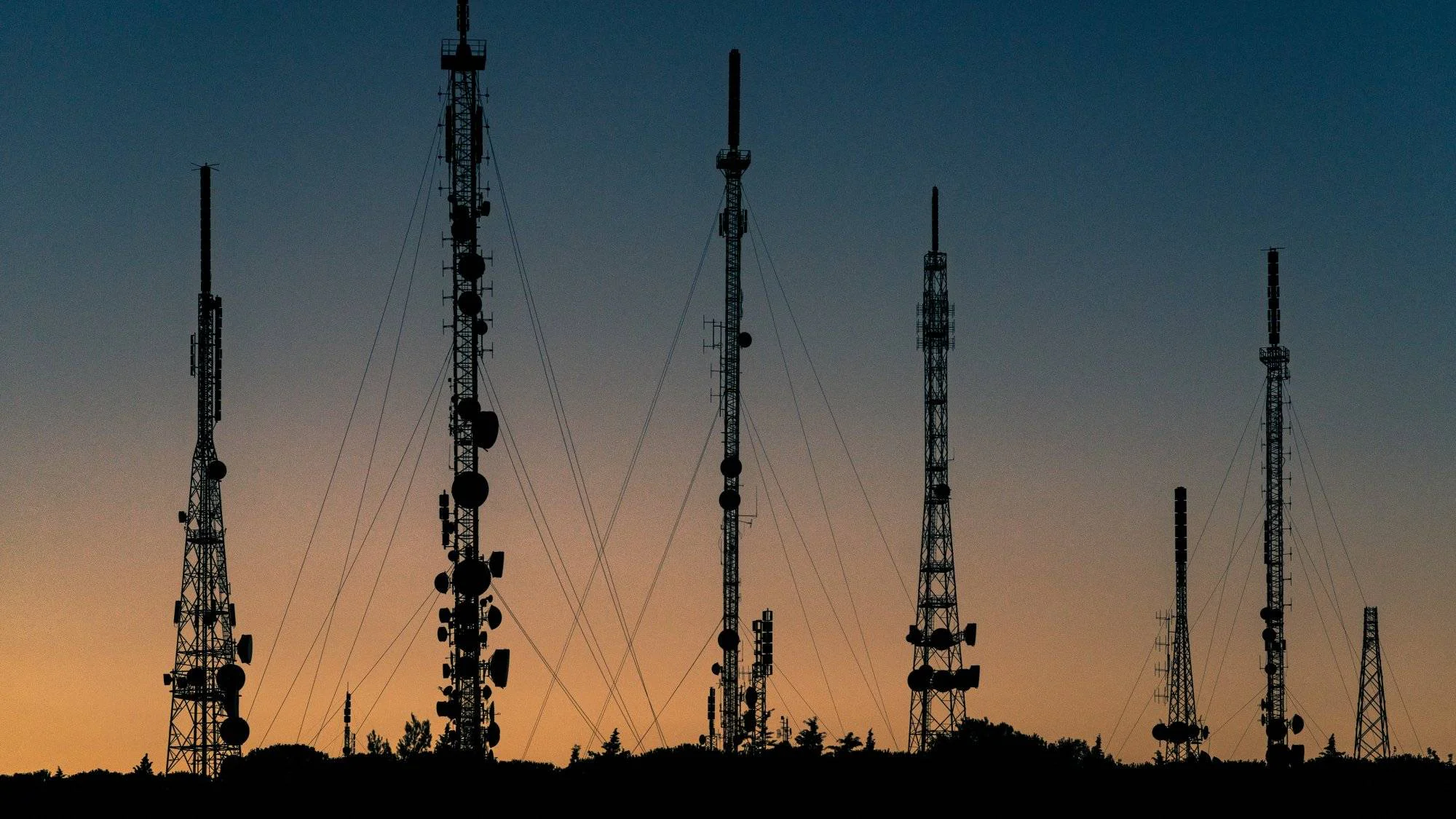
In the early 2000s, Linux altered the balance of power in computing. It dismantled the tight vertical integration model that vendors like Sun and IBM relied on and replaced it with a shared software foundation that ran on almost any hardware. The operating system stopped being a proprietary control point and became a common infrastructure. Value moved up the stack. Ecosystems expanded. The industry shifted from closed systems to programmable platforms.Two decades later, a similar attempt is unfolding in telecom. A Western coalition led by the Linux Foundation, seeded by US FutureG funding and joined by NVIDIA, DeepSig, Ericsson, and Nokia, is pushing to create a “Linux of RAN” through the OCUDU initiative. The target is the CU and DU layer, the programmable heart of the radio network. If this effort gains real deployment, it could reshape a 35 to 40 billion dollar RAN market, open the baseband layer to new entrants, and accelerate a structural split in 6G between Western and Chinese ecosystems.
Qu'est-ce que le facteur de forme MFF2 ?  www.thingsmobile.com Feb. 28, 2026, 6:19 p.m.
Les cartes SIM intégrées sont généralement le choix le plus courant pour les applications M2M, car elles sont scellées sous vide et peuvent être soudées directement sur la carte de l'appareil. Cela augmente la fiabilité en termes de réduction des dysfonctionnements dus aux chocs, à la corrosion et à d'autres facteurs environnementaux. Par ailleurs, le cycle de vie d'une carte SIM intégrée est généralement de 10 ans, soit plus que celui d'un format standard. Cela signifie que vous n'aurez généralement pas besoin de remplacer votre carte SIM pendant toute la durée de vie de votre appareil. En outre, les cartes SIM spécifiques dotées de la spécification technique GSMA fournissent un mécanisme standard pour la mise à disposition et la gestion à distance des connexions M2M. Cela permet la mise à disposition de la carte SIM en direct, ce qui signifie que vous pouvez la mettre à disposition à distance pour vous connecter à un opérateur initial, puis changer ensuite l'abonnement d'un opérateur à l'autre. En général, avec les facteurs 2FF - 4FF, les cartes SIM sont bloquées chez le fournisseur de connectivité d'où elles proviennent.
Solutions eSIM pour entreprises www.cellhire.com Feb. 28, 2026, 6:18 p.m.
L'eSIM est une carte SIM virtuelle qui vous permet de vous connecter à internet, partout dans le monde, sans avoir à utiliser une carte SIM physique. Les eSIM sont l'avenir de la connectivité mobile et sont activables à distance via l'envoi d'un QRcode.
Telcos: We Cannot Get AI Wrong sebastianbarros.substack.com Feb. 28, 2026, 1:09 p.m.
Telecom often adopted the technology early, but money still landed elsewhere. SMS shows what happens when the service is native, end-to-end. The first SMS was sent in 1992. Interoperability accelerated around 1999 to 2000. By 2012, global SMS revenue was above 110 billion dollars per year, and global volumes were in the trillions of messages annually. In several markets, SMS margins exceeded 80 percent because delivery cost per message was near zero and billing was built in.Now compare that with the next waves.i-mode came before app stores. NTT DoCoMo launched i-mode in 1999 with carrier billing, curated content, and a third-party ecosystem. At its peak, it had roughly 40 to 50 million subscribers in Japan and generated meaningful revenue from content.
Satellites Are Getting Closer: The VLEO Race sebastianbarros.substack.com Feb. 27, 2026, 7:06 p.m.
Why 300 kilometers above Earth is becoming the new battleground for telecom, defense, and direct to device connectivity.
30 Startups You Must See at MWC 2026 sebastianbarros.substack.com Feb. 26, 2026, 3:36 p.m.
MWC is always intense. Meetings back-to-back. Hall 3 runs into Hall 2. Private dinners stretch past midnight. Everyone talks about AI, 6G, platforms, and ecosystems. But the most interesting signal every year is not in the keynote stage, but in the startup zone.With more than 600 startup exhibitors at 4YFN alone, you cannot see them all. You are forced to choose, and that choice matters. Startups show where technology is actually moving, where venture capital is placing asymmetric bets, and where incumbents may get disrupted or accelerated.
Broadband Africa www.broadband.africa Feb. 25, 2026, 3:29 p.m.
Bienvenue chez BROADBAND AFRICA, le partenaire incontournable des entreprises africaines pour construire ensemble les réponses idoines aux besoins en Télécommunications. Que ce soit en termes de connectivité, de mobilité, de sécurité, BROADBAND AFRICA vous conseille dans vos choix stratégiques.  Idéalement implantés au Cameroun et au Bénin, notre expertise est au cœur des régions d'Afrique centrale (CEEAC) et d'Afrique de l’Ouest. Nous proposons de vous accompagner à choisir, ensemble, des solutions adaptées pour protéger vos données, vos infrastructures et vos opérations face aux menaces numériques croissantes. Grâce à la maîtrise des technologies avancées voir avant-gardistes combinée à une approche personnalisée, nous garantissons de vous aider à mettre en place des systèmes sécurisés, fiables et performants. 
Kinetic Tokens Are a Trillion Dollar Opportunity for Telcos sebastianbarros.substack.com Feb. 25, 2026, 2:23 p.m.
A few days ago, John Saw introduced a term that reframes how we think about AI in the physical world. He called it the kinetic token. His argument is simple but structural: If large language models are built on informational tokens that represent fragments of text, then machines that move, lift, weld, or drive must be built on atomic units of time-indexed physical state and not just symbols. Measurements are tied to position, velocity, force, energy, and identity.That shift marks the boundary between Language AI and Physical AI. In one world, tokens optimize probability distributions over words. In the other, tokens sit inside control loops where milliseconds translate into motion, and error margins translate into safety risk. When intelligence leaves the cloud and enters factories, roads, ports, and robots, the unit of computation changes. And with it, the infrastructure and monetization logic must change as well.
Incognito Software Systems www.incognito.com Feb. 25, 2026, 10:50 a.m.
Our productized service orchestration platforms allow digital service providers to manage broadband devices and services, bringing extensive automation and analytics to reduce operational costs and improve the user experience. Our solutions are proven in CSP networks globally, delivering tangible operational efficiencies and service agility.
Why Amdocs - Trusted Partner with 40+ Years of Expertise www.amdocs.com Feb. 25, 2026, 10:48 a.m.
We provide the expertise and global reach to accelerate the industry’s journey to the cloud and improve business operations, driving innovative next-generation digital experiences for the end user. Our 5G-ready, cloud-native set of solutions ensures fast time to market and flexibility to keep up with technology’s exponential pace. We also have strategic cloud collaborations with AWS, Microsoft Azure and Google Cloud.
Explication de l'OSS et du BSS dans les télécommunications : Quelle est la différence ? tridenstechnology.com Feb. 25, 2026, 10:46 a.m.
OSS (système de soutien opérationnel) se concentre sur le bon fonctionnement de l'infrastructure des télécommunications, ce qui la rend plus efficace. orienté vers le réseau.BSS (Business Support System) gère l'aspect commercial des télécommunications, ce qui lui permet d'être plus efficace. en contact avec les clients.
TR-069 Auto Configuration Server (ACS) - Device Management www.incognito.com Feb. 25, 2026, 10:41 a.m.
A key component of the Digital Experience Solution, Incognito's Auto Configuration Server (ACS) is a vendor-agnostic, massively scalable software platform that manages and monitors devices over any network, including fiber, fixed wireless, xDSL, HFC, and IoT. By leveraging remote management protocols such as TR-069 CPE WAN Management Protocol (CWMP), TR-369 User Services Platform (USP), SNMP, and MQTT, Incognito's TR-069 ACS device management platform enables greater insight into the in-home network and other services, so you can deliver preemptive support, measure service quality and speed, as well as improve customer experience and QoE, all while driving cost reductions with greater operational efficiency.
Someone Just Solved Telco Inference Economics sebastianbarros.substack.com Feb. 24, 2026, 1:24 p.m.
Over the past 18 months, nearly every major telecom vendor has signaled its ambition in local distributed inference. Nokia aligned its future RAN roadmap with NVIDIA's accelerated GPU platforms. Ericsson has publicly discussed edge inference. SK Telecom is building edge GPU infrastructure. Deutsche Telekom launched its sovereign AI data center initiative in Germany. The telecom industry is repositioning inference from centralized data centers to distributed network environments.But these ambitions are crashing into economics.A modern data center GPU, such as an A100 or H100, typically costs tens of thousands of dollars before power, cooling, and integration. Even enterprise-grade RTX cards become capital-intensive when deployed across dozens or hundreds of sites. Industry surveys and operator feedback suggest that average enterprise GPU utilization often remains well below 50%, frequently in the 15-35% ange, depending on the workload mix. In centralized hyperscale environments, demand aggregation can smooth these inefficiencies. In distributed telco networks, geographic fragmentation tends to amplify them.
OpenAI Is Going Full-On Devices. What That Means for Telecom sebastianbarros.substack.com Feb. 23, 2026, 5:22 p.m.
In the last three months, OpenAI has moved from speculation to reality. Reporting based on sworn court filings confirms a working prototype and indicates that the first hardware product will not ship before late February 2027, alongside a branding pivot away from the “io” name. Executive statements at Davos anchor a reveal window in the second half of 2026.More importantly, first-party hiring signals describe an end-to-end consumer device stack: custom silicon, embedded systems, operating system kernel and frameworks, camera firmware, secure boot, A/B OTA infrastructure, and hardened software supply chain controls. The pattern matches with OpenAI building a vertically integrated hardware platform designed to sit beside the smartphone and control the ambient AI interface layer around daily digital life.OpenAI is leaving chat interfaces behind and moving into the physical world.
Telecom Is Cool Again, But…  sebastianbarros.substack.com Feb. 23, 2026, 9:15 a.m.
For 18 years, telecom apologized for being “dumb pipes” while software ate the world. That era is dead. The illusion of the cloud has shattered against the hard physics of AI: you cannot run a trillion-dollar model on vibes. You need high-density power, advanced cooling, and deterministic glass. We are no longer utilities; we are the Intelligence Refinery.But assets alone won’t save us. While we own the “Last Mile” required for AI inference, our culture is constitutionally hostile to it. We worship the “Five Nines” of static perfection, while AI demands probabilistic speed and risk. If we don’t dismantle this bureaucratic reflex, we will build the most expensive railroad in history only to watch Silicon Valley own the trains.
Inside NVIDIA’s 2026 View of AI in Telecom sebastianbarros.substack.com Feb. 21, 2026, 4:34 p.m.
The NVIDIA 2026 State of AI in Telecommunications survey shows an industry going all-in on AI. Yes, all in. Like very few industries in the world. An industry that will not wait for 6G to apply AI in spectrum, energy, and RAN. An industry where the majority will deploy inferencing at the edge, where AI is already embedded in operations, and where agents are moving fast into production environments.Why?Because the returns are already there. Most operators report improvements in revenue and costs, and almost all plan to increase AI investment in 2026. Telecom has chosen AI as its transformation story and wants to be early, not reactive. The implications are seismic.The AICO revolution is here.
Ces 3 opérateurs mobiles vont facturer la résiliation de leurs forfaits, vers la fin du changement gratuit ? — www.frandroid.com Feb. 21, 2026, 2:22 p.m.
Emboîtant le pas à B&YOU, trois autres opérateurs de téléphonie mobile annoncent l'arrivée de frais de résiliation sur leurs forfaits sans engagement.
Telcos as "AI Agent Factories" ( BYOA) sebastianbarros.substack.com Feb. 20, 2026, 2:01 p.m.
Telco network exposure is the right move. Aduna shows what that looks like in practice. Structured as a joint venture between Ericsson and a group of leading global operators, and built on CAMARA standards, it aggregates network APIs so developers can integrate once and reach multiple networks. In the US, AT&T, Verizon, and T-Mobile are aligned. In recent interviews, Vonage CEO Niklas Heuveldop has been candid: authentication and fraud APIs such as SIM Swap and Number Verification are now generating revenues in the tens of millions.That proves demand is real, even if it remains marginal at telco scale. The industry narrative has matured from headline projections to a more grounded ambition: building the first $100 billion over time.
Ericsson vs Nokia RAN Vision: Both Cannot Be Right sebastianbarros.substack.com Feb. 19, 2026, 3:19 p.m.
AI has forced a fundamental question inside the Radio Access Network: what kind of compute should power 6G? For decades, the answer was obvious: Purpose-built silicon optimized for deterministic signal processing wins on power, cost, and reliability. Now that assumption is under direct scrutiny. NVIDIA class-accelerated compute is entering the baseband conversation, and two European vendors with more than a century of survival behind them are taking opposite paths.Ericsson is doubling down on custom ASIC and energy-efficient Layer 1 acceleration. Nokia is aligning its future baseband roadmap with Nvidia accelerated platforms and positioning RAN as a distributed AI compute fabric. This is not a minor branding disagreement; RAN accounts for roughly 60% of Ericsson's revenue and about 40% of Nokia's. A wrong architectural bet in the 6G cycle could be fatal. But also, the final RAN Vision will also shape margins, market share, and long-term relevance.
MWC 2026: Your Guide to Avoid AI Tourist Traps sebastianbarros.substack.com Feb. 18, 2026, 1:14 p.m.
I love Barcelona, and I love MWC. The people, the energy, the late dinners after Hall 3, the chance to meet half the industry in four days. It is the one week where telecom feels like the center of the world. But like any great city, there are tourist traps. And in 2026, many of them will have AI written in big bold letters. Some will be real innovations. Many will be light integrations, LLM wrappers, and marketing upgrades. I wrote this guide so you can skip the noise, avoid wasting time, and focus on the AI that actually moves cost curves, energy profiles, and revenue.