Is the U.S. Fiber Frenzy Justified? sebastianbarros.substack.com April 30, 2026, 2:29 p.m.
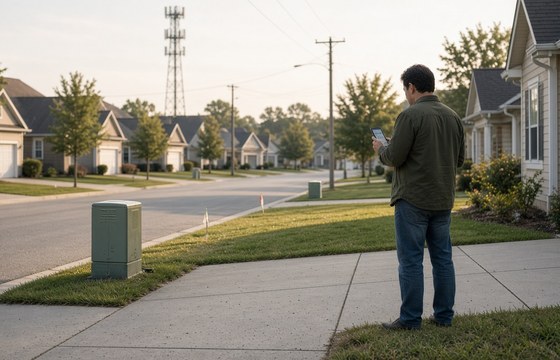
The U.S. fiber story has moved beyond the hype phase. By April 2026, it will have become a capital-intensive rebuild of the fixed access layer, with economics that look far less clean than the coverage numbers suggest.On the surface, the industry has delivered. Fiber now reaches more than 60% of households, and total passings exceed 100 million. But beneath that scale sits a structural tension. Around 16% of these locations are in overbuild zones where two or more fiber networks compete for the same household. In high-income suburbs, three infrastructures often coexist on the same street: cable upgrades to DOCSIS 4.0, a Tier 1 telco deploying fiber, and a regional AltNet seeking to gain market share. The industry has shifted from broad geographic expansion to street-level competition.
Starlink is a Long-Term Risk to Telcos sebastianbarros.substack.com April 29, 2026, 3:01 p.m.
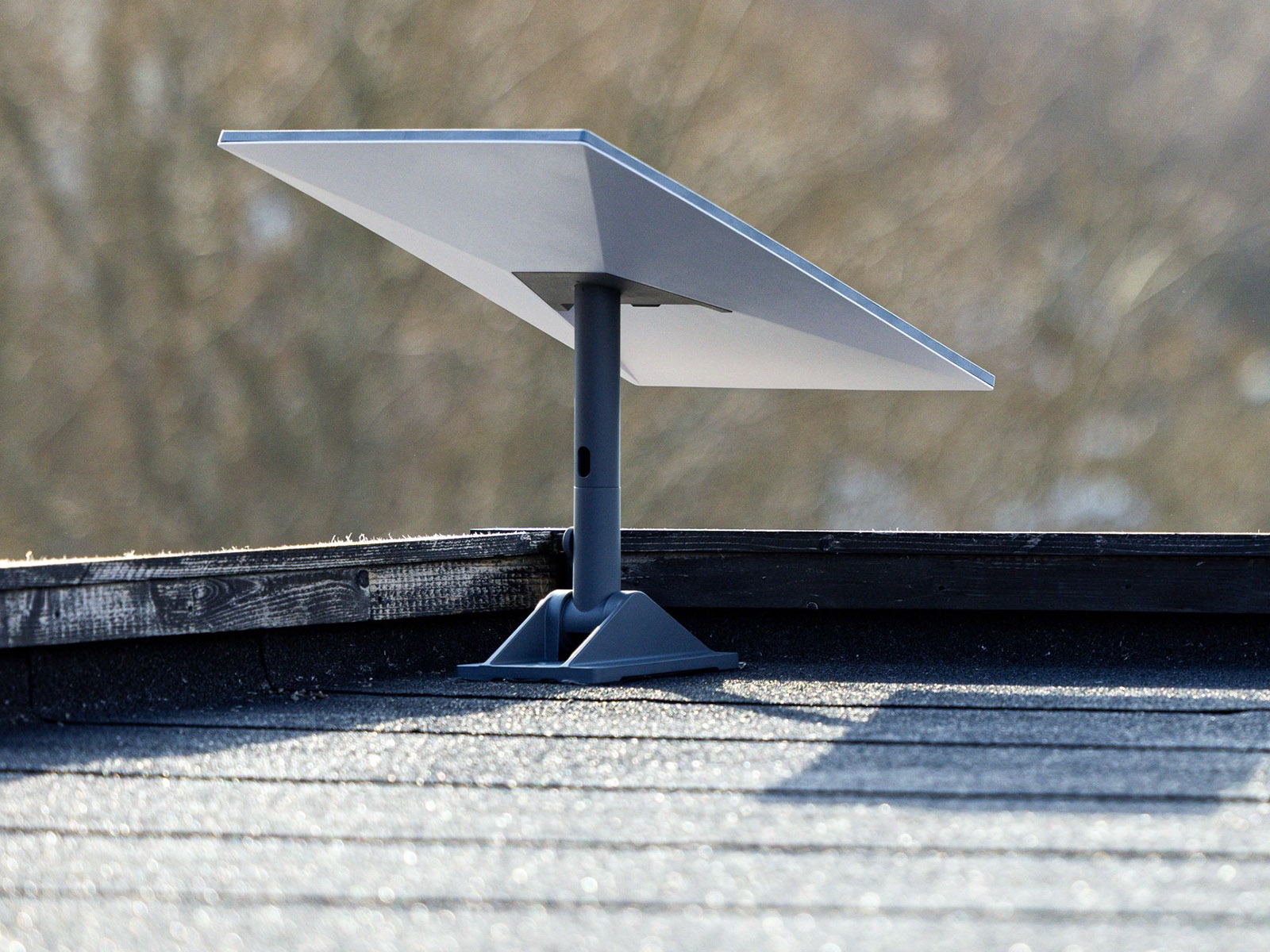
Across the global telecommunications landscape, we are witnessing a sudden, coordinated rush to partner with LEO satellite constellations. On paper, it is a brilliant play for ubiquitous connectivity, a promise of “unbreakable” links and the final elimination of dead zones. But as someone who has spent years in the trenches of network economics, I see a different story unfolding. SpaceX is not spending $20 billion on a constellation just to act as a courtesy backup for the “unconnected 4%.” They are building a global “Flying Tower” infrastructure designed to turn parts of terrestrial networks into legacy utilities. By inviting these orbital platforms into the heart of their service offerings today, Telcos are effectively installing the hardware of their greatest long-term competitor inside their most valuable customer accounts.
The Telecom Brandolini Law sebastianbarros.substack.com April 29, 2026, 10:30 a.m.
Brandolini’s Law says that the amount of energy required to refute bullshit is orders of magnitude higher than the energy required to produce it.Take WeWork. It took Adam Neumann minutes to drop “community-adjusted EBITDA” into a pitch deck and claim a commercial subleasing operation was a global tech platform. It took an aborted IPO, armies of Wall Street analysts, and billions in destroyed US dollars to systematically prove they were just renting out desks. The fiction was cheap. The reality check was incredibly expensive.Telecom operates entirely on this dynamic. We spend way too much time and capital proving bullshit wrong. Every investment cycle introduces a frictionless new narrative, 5G enterprise monetization, edge computing, AI RAN, that instantly absorbs attention, R&D, and capex. Organizations align their entire strategy around ideas that rarely translate into actual yield. Meanwhile, the financial fundamentals barely move. Top-line revenue remains flat, and value continues shifting to players above the network.
Direct-to-Device (D2D): Niche or Mainstream Opportunity? sebastianbarros.substack.com April 28, 2026, 6:36 a.m.
Direct-to-Device connectivity is fundamentally constrained by the immutable laws of physics, specifically Free Space Path Loss. When a standard, omnidirectional smartphone attempts to connect to a Low Earth Orbit satellite at an altitude of 550km, it must overcome signal degradation that is roughly 300,000 times greater than that encountered when communicating with a terrestrial base station located 1km away.The Brutal Physics of D2D: Why orbital broadband remains a monumental RF engineering challenge. Overcoming the 550km distance to a LEO satellite means battling signal degradation roughly 300,000 times worse than a standard 1km connection to your local cell tower.Even if satellites are deployed in Very Low Earth Orbit at 330km, the FSPL penalty remains 110,000 times worse than terrestrial links. Because it is impossible to compensate for this magnitude of loss on the device side due to inherent size, battery, and integration constraints, D2D networks operate at the absolute limits of RF engineering. Real-world telemetry reflects this harsh environment: signal strength measurements for U.S. D2D connections consistently fall between -108 and -126 dBm. Falling well outside the standard -80 to -120 dBm range of terrestrial cellular networks, these are functionally “heroic connections” sustained only because they exist in remote, interference-free outdoor environments.
How to Build an AI-Native Telco (And Why 99% of Operators Will Fail) sebastianbarros.substack.com April 27, 2026, 6:55 a.m.
There is a brutal structural pivot telecom and legacy enterprises must make to survive: shifting from broken, open-loop systems bottlenecked by "human middleware" to self-optimizing, closed-loop AI operating systems. Cutting through the industry's "snake oil" and AI-washing, it outlines the blueprint for a truly "queryable company", one where every meeting, workflow, and manual task is codified into searchable data artifacts rather than lost in silos. Ultimately, this is not just about slapping copilots onto legacy tech; it’s about giving operators an "AI forklift" that drives 1000x productivity and turns stagnant execution into an automated, learning machine.
TinyML : La révolution de l’IA dans les appareils à faible puissance liora.io April 27, 2026, 5:33 a.m.
Dans un monde où l'intelligence artificielle (IA) devient de plus en plus intégrée dans notre quotidien, une nouvelle frontière se dessine : le Tiny Machine Learning (TinyML). Cette avancée permet de déployer des modèles d'IA sur des appareils à faible puissance et de petite taille, ouvrant ainsi un champ de possibilités inédites.
"Telco Convergence is an elevated name for discounts" sebastianbarros.substack.com April 25, 2026, 4:25 p.m.
Offering a flat-price bundle on a unified billing statement does not alter the underlying commodity. Tying a high-speed fiber line to a 5G mobile plan is, fundamentally, just selling two dumb pipes for the price of one and a half.This is exactly why commercial bundling alone is a bear trap. If the only value proposition connecting the home network to the mobile network is a $20 monthly discount, the operators are not creating a new product ecosystem; they are simply cannibalizing their own ARPU to temporarily artificially deflate churn.This brings us to what we can call the Parachute Paradox. Telco executives recognize they are locked in a commoditization nosedive. The traditional business of selling faster speeds and larger data buckets is losing altitude fast. In response, they have jumped out of the plane, relying on “convergence” to save them. But because Phase 1 convergence is woven entirely out of price cuts, it is not actually a parachute, but it’s just a drag chute. They are still going to hit the ground; they are just controlling the descent speed.
Telcos, How Well Do You Know Your Robots sebastianbarros.substack.com April 20, 2026, 1:58 p.m.
If you thought Generative AI was wild, you are completely misjudging the scale of what comes next. GenAI is software that replaces clicks and synthesizes text. Physical AI is another league entirely. It is software entering the physical world to directly enhance, or replace, human labor.We are talking about a direct disruption of a $50 trillion global labor income market, and it is moving at a frenetic, violent pace. In just a few years, telecommunications will face an entirely new customer segment, undoubtedly the biggest and most important one in history. And no, you cannot sell them gigabytes per month!But right now, the industry is blind to what this new segment is like, what they want, how they buy, and where they live. We need to profile this new persona.
Verizon CEO: The Network Is Not Enough sebastianbarros.substack.com April 19, 2026, 3:17 p.m.
The top network delivers around 300 Mbps of 5G speed, while others sit closer to 200-220 Mbps. That gap is real from an engineering and capital perspective, but is marginal from a consumer perspective. At 200 Mbps, everything on your mobile works. Video streams, apps load, calls connect. The user does not experience a problem to solve, and that is the shift. The industry still debates speed, latency, and coverage, but users judge something else entirely. They judge how the service feels within the apps they use every day, and how much friction it takes to interact with your brand. The question for Telcos now is what actually makes a customer stay or leave when the network is already good enough.
Build a $20k Military-Grade Router for $106 Using a Raspberry Pi www.geeky-gadgets.com April 18, 2026, 10:02 a.m.
Extensive testing demonstrates that this system delivers impressive performance. With an 8 MHz channel width, it achieves data rates of up to 15 Mbps, supporting tasks such as video streaming and internet access. The network maintains functionality at ranges of up to 2,000 feet, making it suitable for both short- and long-range communication needs.
OpenMANET openmanet.net April 18, 2026, 9:43 a.m.
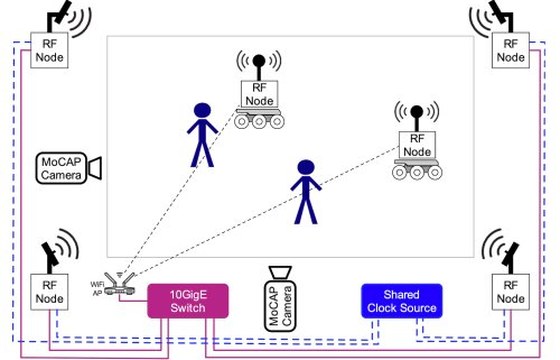
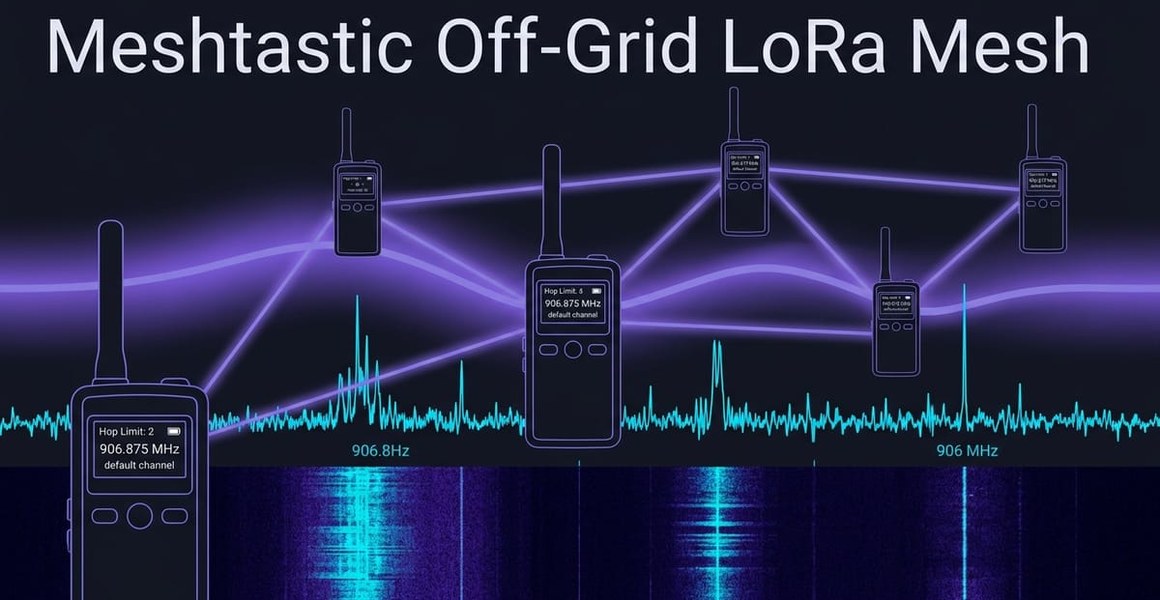
OpenMANET is an open-source project for building Raspberry Pi–based MANET radios on Wi-Fi HaLow (915 MHz) using Morse Micro chipsets. A MANET (Mobile Ad-Hoc Network) is a self-forming wireless mesh where each node connects directly without centralized infrastructure. This technology is especially useful in the civilian space for search and rescue, disaster response, airsoft events, and any disconnected communications scenario. Designed to be budget-friendly with excellent long-range performance. The build is designed to integrate with ATAK over multicast, but works equally well over standard IP and internet links.
Meshmerize Partners for Wireless Mesh Networking in Drone Swarms www.unmannedsystemstechnology.com April 18, 2026, 9:42 a.m.
Meshmerize, a specialist in software wireless Mobile Ad hoc NETwork (MANET), is collaborating with 8devices, an EU-based manufacturer of compact wireless modules and a Qualcomm Authorized Design Centre (ADC). The partnership will integrate Meshmerize’s advanced mesh networking technology with 8devices’ wireless modules to address the need for high-capacity, multi-hop communication in dynamic, high-density autonomous system environments.
Back to the Future: We Need to Save Voice... Again sebastianbarros.substack.com April 18, 2026, 8:55 a.m.
The industry has been on a 15-year treadmill to nowhere, and the numbers are brutal, with zero net growth. While we were busy burning billions trying to be “anything but a Telco”, buying aging media studios, chasing ad-tech pipe dreams, and praying for IoT pennies, we left our most lethal weapon out in the rain. Voice. We let it become a commoditized, free, unlimited background utility. Big mistake.We lost the first wave to Skype (a trillion-dollar topline crater). We lost the second to WhatsApp (a $386 billion scalp). Now, the Agentic Bypass is coming for the final $15 billion. Why? Because the biggest breakthrough in human history isn’t that AI can write a poem, it’s that it can finally hear, understand, and act on the human voice. The “software middleman” is dying. Natural language is the new OS, and the Telco owns the only trusted entry point left on the planet.
Does Amazon Leo Have Any Chance Against Starlink? sebastianbarros.substack.com April 16, 2026, 1:28 p.m.
By 2029, the LEO market will have officially split into two fundamentally different business models. SpaceX is doubling down on its role as the ultimate Global Telco Utility. With a network designed for massive, best-effort consumer volume, Starlink is focusing on the “unconnected” and the “unhappily connected.” Their success relies on a brute-force infrastructure play: high density, low latency, and a direct-to-consumer relationship that cuts out the middleman. They are effectively becoming the “water company” of the digital age, focused on delivering the most bits to the most people at the lowest cost.
Amazon’s $11B Globalstar Casino Gamble: Genius or Desperation? sebastianbarros.substack.com April 15, 2026, 5:07 p.m.
The genius of Bezos gamble and the controversy of it lies in Globalstar’s S-band spectrum (2.4 GHz). In the telecom world, spectrum is the “land” upon which digital cities are built. While Starlink relies on high-frequency Ku and Ka bands (perfect for high-speed home internet but terrible for penetrating walls or connecting to small antennas), the S-band is the “Goldilocks” frequency. It is globally harmonized, meaning a device using it can work in London just as easily as in Tokyo without changing hardware. More importantly, it is the precise frequency needed for Direct-to-Device (D2D) connectivity.
The US Supply Chain Shakeup After Tariffs, in Five Charts  www.library.hbs.edu April 14, 2026, 1:12 p.m.
Last year’s US-imposed tariffs sped up significant trade shifts—toward Mexico and away from China—that began years earlier and have diversified American imports among top partners.While the Trump administration’s major tariff announcement on April 2, 2025, was billed as “Liberation Day,” research by Harvard Business School’s Laura Alfaro suggests that companies were already positioned to adjust to the levies. The recalibration of supply chains has been so profound that US imports from China have returned to near-2001 levels, when the country entered the World Trade Organization.
Lidl Retail MVNO: A 50 Million Subscribers play? sebastianbarros.substack.com April 14, 2026, 1:06 p.m.
A few weeks ago, I wrote about Walmart becoming the world's largest MVNO. Now, one of the largest pan-European retailers is making a massive regional play to become a telco as well. Schwarz Group, the parent company of Lidl, recently invested $80 million to take a near10 % stake in the eSIM platform 1Global, with plans to scale its Lidl Connect MVNO across 30 markets and more than 150 million unique visitors to its stores.The initial reaction is to view this as a repeat of the 2010s, when supermarkets launched low-margin MVNOs to compete on price. This is a fundamental misreading of modern retail economics. Retailers like Lidl could not care less about running a profitable standalone telecommunications operation. They are using wholesale connectivity as a behavioral lever to drive their core business, boosting physical-store footfall, deepening loyalty ecosystems, and opening new digital distribution channels. Connectivity is no longer a product to be sold but a programmable incentive to capture high-frequency consumer behavior.
10 cases for 5G Uplink monetization sebastianbarros.substack.com April 13, 2026, 4:20 p.m.
For years, our networks were crippled on the uplink by design. We were trapped in Non-Standalone purgatory. In NSA, no matter how wide your 5G mid-band channel was, your control plane and your uplink were essentially anchored to the legacy LTE leg. We were trying to push next-gen, machine-heavy use cases through a legacy straw, forever shackled to an archaic 10:1 Downlink-to-Uplink design philosophy. We were uplink-starved by default, constantly fighting physics just to keep a decent connection alive at the cell edge. 5G SA finally cuts the LTE anchor.By removing that crutch, we unlock the actual plumbing required to do interesting things. We are talking about true Uplink Carrier Aggregation. We are talking about dynamic Tx switching that allows a device to seamlessly flip its transmission power between a capacity-heavy TDD mid-band and a coverage-heavy FDD low-band in milliseconds. Add in Supplementary Uplink, and suddenly you aren’t just dropping packets the second a device moves indoors or hits the cell edge.For the first time, we actually have the fat, dedicated pipes necessary to shift from a human-centric network to a machine-centric one. We now have the architectural bandwidth to support a reality in which devices aren’t just passively consuming data but are aggressively pushing high-fidelity, real-time context to the network.
Is 6G ISAC Dead on Arrival? sebastianbarros.substack.com April 12, 2026, 3:44 p.m.
6G is still searching for a reason to exist. Stuck by this 15-year-old obsession with finding a “killer app,” the telecom industry has decided its next great revolution is Integrated Sensing and Communication (ISAC), or essentially turning cell sites into radars. Frankly, pitching this as a breakthrough is a bit stupid. Radar is a 120-year-old, highly mature technology already operating perfectly in the 8 to 81 GHz bands using FMCW. Telcos suddenly “discovering” that radio waves bounce off objects, ignore a century of established science.Predictably, the ecosystem is now rushing out whitepapers on drone detection, conveniently ignoring the brutal technical reality. To achieve high-detail sensing, you must use mmWave frequencies in heavily densified grids, a spectrum we already know is a commercial failure, largely relegated to sports stadiums. The proposition that operators will densify networks solely to sell a use case already mastered by the advanced defense industry, in the hope of moving the needle in a $1.3 trillion global market, is mathematically absurd.
Are We Overproducing AI Tokens? sebastianbarros.substack.com April 10, 2026, 10:45 a.m.
Every infrastructure wave starts the same way. Railroads, electricity, fiber, mobile. Massive capital, aggressive build, everyone racing to lay the foundation before demand fully exists. AI is following the same pattern, but at a different order of magnitude. One-gigawatt data centers are being deployed at the scale of small cities. Hundreds of billions are flowing into compute, models, and energy. Telcos are now looking at the last mile of this system, positioning themselves as distributors of intelligence, not just connectivity. But what happens if supply runs ahead of demand?Inference costs are already collapsing. Token prices are compressing before the market has fully formed. Enterprise adoption is real, and consumer usage is exploding, but the slope of demand remains uncertain relative to the scale of supply coming online. Telcos face a narrow window: Enter too late, and the value is gone. Enter too early, and they risk building into oversupply. The only way through is to understand whether this is the next infrastructure boom or the next overbuild cycle.