
What a Quality of Earnings Report Reveals Before a $1M to $20M Acquisition
carbonlg.com
Sept. 19, 2026, 7:14 a.m.
A quality of earnings report, or QofE, serves as a critical financial analysis tool that determines deal pricing in lower middle-market acquisitions ranging from $1M to $20M, often surpassing legal due diligence in importance. Unlike traditional audits that verify compliance with accounting standards, a QofE independently assesses whether reported profits reflect the real, repeatable economics of a business that will continue post-acquisition. Buyers typically commission a buy-side QofE after signing a letter of intent, with their accounting firm conducting the analysis. Sellers can proactively commission a sell-side QofE before market entry, representing the single most useful preparation step available. Companies at this size frequently lack audited financials and blend owner personal expenses into reported figures, widening the gap between reported and true economic profit. The QofE analysis examines this discrepancy by tying reported revenue to actual bank deposits and assessing earnings sustainability. Understanding what the report measures and preparing accordingly enables sellers to navigate this process effectively and achieve better deal outcomes.
Share on

How AI is Transforming Cross-Border Due Diligence
www.dfinsolutions.com
Sept. 19, 2026, 7:13 a.m.
Cross-border transactions present substantial operational challenges due to complexity across multiple jurisdictions, time zones, languages, and document formats. While not conceptually harder than domestic deals, they are larger, slower, and more fragmented—with fragmentation being where confidence erodes. Deal teams are now leveraging AI to address this friction, not to replace judgment but to accelerate comprehension of gathered materials. The primary bottleneck lies in converting thousands of pages of contracts, filings, employment agreements, and regulatory correspondence into actionable understanding for deal committees. Language barriers and local legal conventions compound delays, as documents require translation and local counsel review before commercial stakeholders can weigh in meaningfully. Three significant shifts are emerging. First, machine translation has evolved from rough approximation to usable triage and first-pass review tools, allowing teams to identify documents requiring expert attention rather than translating everything upfront. Second, AI-powered summarization enables rapid triage of large document volumes by presenting substance in concise, readable form, helping reviewers determine escalation needs. Third, enhanced process visibility is transforming how deal teams operate. These advances compress the timeline between document receipt and informed decision-making, reducing delays and enabling senior leaders to focus on strategic judgment rather than administrative triage.
Share on

Part 1: Your AI Can't Read Your Deal Pipeline. Here's Why
lanternstudios.com
Sept. 19, 2026, 7:13 a.m.
Private equity firms increasingly invest in AI tools to analyze deal pipelines and portfolio data, yet many implementations fail within months despite strong initial demonstrations. The fundamental problem is not AI capability but data fragmentation across enterprise systems. Most mid-market PE firms operate seven or more disconnected platforms spanning CRM systems, market intelligence tools, virtual data rooms, fund accounting software, LP communication systems, and shared drives, with Excel serving as the default integration layer. These platforms lack unified data schemas, meaning questions requiring cross-system analysis produce plausible-sounding but incomplete answers. When deal teams recognize this limitation, they abandon the AI tools and revert to manual processes, incorrectly concluding that AI is unsuitable for private equity. The real issue is that firms' data infrastructure is not prepared for AI deployment. Without consolidating data across disparate systems into coherent structures aligned with business needs rather than individual platform architectures, generative AI cannot deliver the holistic insights that drive value. Successfully operationalizing AI in private equity requires addressing foundational data organization challenges before implementing advanced analytical tools.
Share on

Legal Technology: 120 Funding Deals (Full List 2024-2026) (2026)
newmarketpitch.com
Sept. 19, 2026, 7:13 a.m.
The legal technology market is experiencing substantial growth as law firms and corporate legal teams increasingly adopt AI-powered solutions, contract management software, litigation tools, and workflow platforms. A comprehensive analysis identified 120 funding deals in the Legal Tech sector between Q1 2024 and Q2 2026, demonstrating robust investor confidence in the space. The research defines Legal Tech as software products specifically designed to support legal work and decision-making, encompassing core legal workflows such as matter management, contract lifecycle management, eDiscovery, document management, and billing systems, alongside legal information and AI products grounded in legal sources. The analysis focused exclusively on pure-play companies with at least 70-80% of revenue directly tied to legal technology, applying a minimum funding threshold of $300,000 globally. Recent notable funding rounds include Patlytics securing $40 million for its AI patent platform, Legora raising $50 million for collaborative legal AI, and Jurisphere.ai obtaining $2.2 million for legal research and document review capabilities. This funding activity underscores the market's significance as legal professionals increasingly leverage technology to enhance efficiency and decision-making processes.
Share on

Facturation électronique : la moitié des dirigeants ne perçoit pas l'utilité de la réforme
www.lesechos.fr
Sept. 18, 2026, 1:48 p.m.
Selon le dernier baromètre trimestriel des TPE-PME de Bpifrance Le Lab et Rexecode, publié ce vendredi et que « Les Echos » dévoilent en exclusivité, les dirigeants sont bien au rendez-vous de cette obligation légale. Contrairement aux sondages d'avant l'été, qui montraient un état d'impréparation, surtout chez les petites structures, la grande majorité du millier de dirigeants sondés fin août-début septembre se disent prêts (91 %), un quart ayant même anticipé le changement.
Share on
Starlink Will Provide a 5G-Like Experience by 2028... Wait, What?
sebastianbarros.substack.com
Sept. 17, 2026, 11:12 a.m.
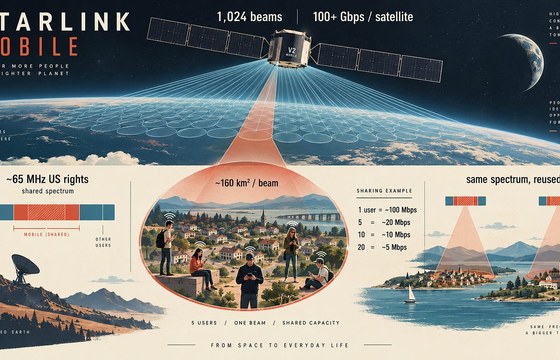
That sounds almost ridiculous when you think about the physics. Your phone transmits with roughly 200 milliwatts through a tiny antenna, while the satellite is moving hundreds of kilometers above your head at orbital speed. Somehow SpaceX wants to turn that into something that feels like 5G.
The interesting part is that the 150 Mbps claim isn’t obviously bullcrap; in fact, the physics can work. Of course, what becomes much harder is maintaining that experience when you add thousands of users, cities, buildings, spectrum constraints, interference, and the tiny uplink coming from your phone.
So yes, Starlink Mobile can deliver 150 Mbps from space. The real question is where, for how many people, for how long, and what SpaceX still needs to build around the satellite network to make “5G quality” mean something in the real world.
Share on
Best AI Contract Review Software: A Vendor-Neutral Comparison
dancumberlandlabs.com
Sept. 12, 2026, 7:16 a.m.
The contract review software market encompasses fifteen-plus platforms with significant variation in pricing, ranging from $3,000 annually to over $30,000 monthly, and implementation timelines from immediate to nine months. While platforms use similar marketing language, they differ fundamentally in their design and capabilities—some function as drafting assistants rather than review systems, such as Spellbook. Selection depends on contract volume, type, and implementation urgency, with different solutions suited to high-volume NDAs, M&A diligence, or integration with existing finance systems like Workday. Purpose-built AI contract review platforms outperform general-purpose tools like ChatGPT by providing consistency guarantees and legal-specific training data, avoiding the liability risk of inconsistent clause interpretations. DocuSign research confirms that general-purpose AI lacks this consistency, creating critical vulnerabilities in legal contexts. Purpose-built solutions employ pre-configured playbooks and audit trails to apply rules uniformly. The global legal technology market is projected to reach $50 billion by 2027, with organizations processing 2,500+ contracts annually potentially realizing over $2 million in annual benefits by transitioning from manual or general-purpose tools to specialized platforms. This guide compares fourteen purpose-built platforms organized by use case rather than vendor ranking.
Share on

How to Build an AI-Native Deal Sourcing Engine
grata.com
Sept. 12, 2026, 7:16 a.m.
Dealmakers increasingly ask whether large language models like Claude can replace specialized deal sourcing platforms, and the answer is nuanced. While Claude excels at reasoning through investment theses and synthesizing public information rapidly and cost-effectively, it fundamentally cannot serve as a complete discovery engine. Claude's reliance on publicly available data means it misses fragmented middle-market companies operating under the radar—often the most attractive acquisition targets. Grata's step-by-step guide advocates treating Claude as a reasoning partner to refine hypotheses rather than a discovery tool. Well-structured prompts help teams rigorously analyze sector dynamics like fragmentation, revenue models, and labor inefficiencies. However, executing on sourcing requires combining AI's analytical strengths with purpose-built private market intelligence platforms that can access the dark data of private companies lacking press coverage, LinkedIn presence, or public financials. This integrated approach—leveraging AI for thesis development while using specialized platforms for target identification in opaque middle markets—creates a scalable, reliable AI-native deal sourcing engine that neither tool can achieve independently.
Share on

Technical limitations and infrastructure requirements for 6G networks
fintech24h.com
Sept. 5, 2026, 11:37 a.m.
6G networks aim to transcend the limitations of current 5G infrastructure by integrating sub-terahertz frequency bands and native artificial intelligence to achieve sub-millisecond latency and terabit-per-second data rates. Unlike previous generations that relied on rigid, hardware-defined protocols, 6G shifts toward a software-centric model where the physical layer itself is optimized by deep learning algorithms to adapt to environmental interference in real-time.
Share on

Red Flags in Financial Due Diligence: 15 Warning Signs That Reprice or Break a Deal
maraz.es
Sept. 4, 2026, 6:23 p.m.
Financial due diligence represents a critical examination of a company's accounts during sales transactions, designed to identify red flags that could cause buyers to overpay, inherit liabilities, or withdraw from negotiations. Rather than confirming satisfactory conditions, this process seeks indicators requiring further investigation—findings that typically reprice deals downward, modify contract warranties, or convert portions of payment into conditional earn-outs. The article presents fifteen warning signs commonly encountered in middle-market and Spanish family business acquisitions, emphasizing that red flags are not proof of fraud but indicators warranting deeper scrutiny. A key principle distinguishes seasoned analysts from novices: dangerous red flags rarely appear in isolation, and their combination proves most revealing. For instance, 30 percent sales growth alone appears healthy, but combined with 70 percent receivable increases, extended collection periods, and negative operating cash flow, it signals genuine concern. Rigorous due diligence transcends basic numerical verification to examine the distance between seller representations and actual economic reality. This comprehensive approach serves both prospective buyers and sellers, with early problem detection benefiting all parties; conversely, undiscovered red flags surfacing post-signature can prove deal-fatal.
Share on

Commercial Due Diligence in Mid-2026: Why Confirmatory-Only Research Now Loses Deals
www.bellandholmes.com
Sept. 4, 2026, 6:22 p.m.
Private equity valuations have reached unprecedented levels, with median buyout entry multiples hitting 11.8x EBITDA in 2025, forcing a fundamental shift in how commercial due diligence is conducted. As debt financing has contracted to just 37% of entry multiples—down from historical 44% averages—equity buyers are financing more capital themselves, meaning operational performance must now deliver returns that cheap leverage once provided. This pricing squeeze is reflected in top-quartile buyout funds achieving only 8% pooled IRR in 2025, compared to 18% for the S&P 500. Consequently, PE teams are moving commercial due diligence from post-LOI confirmation into pre-LOI screening stages, where primary research can actually invalidate weak investment theses before significant capital and senior management time are committed. The shift reflects a critical realization: with entry multiples now pricing in growth assumptions, the question is no longer whether a target is a sound business, but whether its specific growth thesis will materialize. Conducting research too late merely validates an already-locked investment case; conducting it early enough allows teams to eliminate flawed assumptions before deals progress, fundamentally improving risk management in an increasingly expensive market.
Share on
Operational Due Diligence Services
www.bdemerson.com
Sept. 4, 2026, 6:22 p.m.
Titan Intake engaged BD Emerson to conduct operational due diligence and strengthen its security infrastructure. BD Emerson guided the organization through a comprehensive security overhaul, enabling Titan Intake to achieve and exceed both HIPAA and SOC 2 Type 1 compliance standards. The engagement demonstrated BD Emerson's capacity to transform complex compliance requirements into a streamlined, efficient process while maintaining meticulous attention to detail. By establishing robust security protocols from project initiation, BD Emerson delivered substantial value that accelerated Titan Intake's compliance timeline. The successful completion of this security enhancement has strengthened client confidence in Titan Intake's platform for specialist referrals, reinforcing trust in the organization's commitment to protecting sensitive healthcare information and supporting individuals seeking specialized medical services. This engagement underscores the importance of specialized operational due diligence in healthcare technology environments.
Share on

La France dans la compétition scientifique mondiale : radioscopie d'un décrochage ?
www.hceres.fr
Aug. 26, 2026, 11:41 a.m.
Si les États-Unis demeurent la principale puissance scientifique, leur position est fortement contestée par la Chine, particulièrement en Sciences Physiques et de l’Ingénieur où cette dernière occupe nettement la première place. La part d’audience de la France se détériore, passant de 4,3% à 2,7%, soit une baisse de 37,2% sur les deux dernières décennies. Cette baisse est la plus importante du panel après celle du Japon. En cinquième position en 2005, la France occupe aujourd’hui la dixième place, ayant été progressivement devancée par plusieurs pays comparables tels que le Canada, l’Italie et l’Australie, notamment en période post COVID-19. Elle est désormais rattrapée par des pays tels que l’Espagne, la Corée du Sud ou les Pays-Bas, dont l’audience pesait moitié moins que la sienne il y a vingt ans.
Share on

Telcos: Being Right vs. Being Paid
sebastianbarros.substack.com
Aug. 21, 2026, 8:39 a.m.
Telecom has spent the last decade proving that Open RAN, private 5G, edge computing, network APIs, 5G standalone, and network slicing can all work. The problem is that working and making money are not the same thing. The pattern is always the same. A new technology appears, standards get written, vendors publish enormous TAMs, consultants draw a hockey stick, operators spend billions, and a few years later the technology is still alive while the original revenue forecast has quietly disappeared. That is key these days because telecom is standing next to an even larger pile of capital labeled AI. Telcos are again being shown huge opportunities around inference, sovereign AI, GPU-as-a-service, AI-RAN, and edge infrastructure. Some of them may be real. But before spending another few billion proving they were technologically right, operators should ask a much simpler question:
If we are right, who actually gets paid?
Share on

Freelance Commercial Due Diligence Specialist: Making Investment Decisions Based on Solid Facts
consultingheads.com
Aug. 15, 2026, 7:15 a.m.
This service provides access to vetted freelance commercial due diligence specialists who deliver rapid, data-driven analysis to support investment decisions. These professionals structure comprehensive market assessments covering competition, customers, pricing, and business validation within clearly defined timelines aligned with investment committee meetings. The specialists employ rigorous methodologies including customer interviews, risk quantification, and multi-source data triangulation from research, management inputs, and market feedback to build compelling equity narratives. Deliverables are organized into weekly sprints addressing specific commercial questions while maintaining active coordination with deal teams and target companies. Candidates are matched within 24–36 hours based on sector expertise and methodological fit, ensuring transaction timelines remain uncompromised. The service differentiates itself by evaluating specialist performance not merely on project completion but on whether analysis substantively influenced investment decisions. Post-project assessments focus on analytical quality, communication effectiveness, and deadline adherence. Specialists maintain particular depth in sectors like B2B SaaS and tech-enabled services, with expertise spanning customer interview protocols, net revenue retention analysis, pricing architectures, and pipeline evaluation.
Share on

Sample Due Diligence Report: Structure, Key Components, and Best Practices
dealroom.net
Aug. 15, 2026, 7:14 a.m.
Due diligence reports are critical investigative documents prepared before finalizing significant business transactions such as mergers, acquisitions, or investments. These comprehensive reports consolidate financial, legal, operational, and marketing information to enable executives to evaluate risks and opportunities systematically. Using sample templates streamlines the process by providing pre-designed sections for financial statements, legal documentation, asset inventories, employee records, and supplier information, allowing teams to focus on data analysis rather than formatting. Given that due diligence findings can determine whether deals proceed, are renegotiated, or are abandoned entirely, the quality and clarity of reporting directly impacts multimillion-dollar decisions. An effective due diligence report includes an executive summary positioned at the beginning, which distills the entire investigation into several pages for time-constrained decision-makers. This section should highlight transaction rationale, identified risks, major opportunities, and recommendations while immediately flagging any significant financial, legal, or operational concerns. Additionally, the report must clearly define its research scope, specifying what was examined and what was excluded. Well-structured templates with defined formats enable stakeholders to quickly assess deals and facilitate informed decision-making across organizational leadership.
Share on

Red Flags That Only Surface Through Primary Research in Due Diligence
www.bellandholmes.com
Aug. 15, 2026, 7:14 a.m.
Primary market research has become essential in B2B due diligence, revealing critical red flags that secondary sources deliberately obscure. While acquisition teams typically rely on analyst reports, management presentations, and industry databases during due diligence, these materials are curated by the seller to present a favorable narrative. Primary research—direct data collection from customers, competitors, distributors, and industry participants through interviews, surveys, and expert calls—uncovers what the market actually thinks rather than what the seller wants disclosed. In B2B contexts, this distinction carries significant financial implications, as each interview provides substantial signal value. Single conversations with current customers can surface information sellers spent years concealing in data rooms. Although primary research is time-intensive and costly, the expense is justified against potential losses from missed red flags that impact deal multiples. Secondary research sources face structural limitations, including documented instances of fabricated market-sizing without verifiable primary sources. This blind spot has established primary B2B market research as the standard due diligence layer for high-stakes investment decisions, providing the contextual, deal-specific intelligence that secondary sources cannot replicate.
Share on

Mastering the Art of Deal Sourcing: A Comprehensive Guide for Investment Professionals
www.4degrees.ai
Aug. 15, 2026, 7:14 a.m.
Deal sourcing, the systematic identification of investment opportunities aligned with strategic objectives, represents a cornerstone practice in private equity, venture capital, and investment banking. This comprehensive guide addresses the methodologies and tools essential for M&A advisors, investment bankers, and investment firms seeking to enhance their deal-origination capabilities. The article establishes that deal sourcing constitutes the critical first step in the deal flow process, preceding due diligence, valuations, and closure negotiations. The guide distinguishes between two primary approaches: traditional relationship-driven sourcing, which relies on personal networks, referrals, and industry connections built through reputation and trust, and technology-driven deal sourcing, which leverages data analytics platforms and advanced tools to process large datasets efficiently. Modern technology-enabled approaches provide competitive advantages by expanding reach and accelerating opportunity identification across broader markets. As business landscapes evolve, the integration of technological solutions increasingly complements or displaces traditional methods, enabling firms to build robust investment pipelines and maintain competitive positioning in identifying promising opportunities.
Share on

AI for Private Equity: 2026 Data, Costs and Playbook
www.tommasomariaricci.com
Aug. 15, 2026, 7:14 a.m.
Private equity has achieved a significant milestone in artificial intelligence implementation, with FTI Consulting's 2026 Private Equity AI Radar revealing that 95% of funds report their AI initiatives meeting or exceeding original business cases. However, a critical gap exists between strategic success and operational reality: only 36% of portfolio companies actively use AI in daily operations, and merely 7% describe it as fully integrated across their portfolios. This distribution challenge represents the core issue facing the sector. Despite strong capital commitment—with 88% of PE firms investing over $1 million in generative AI and two-thirds planning to allocate 25% or more of budgets toward AI in 2026—Bain estimates only 20% of portfolio companies have generative AI use cases in production with concrete results. Deloitte's research shows 86% of dealmakers already use generative AI in workflows, while EY reports that 84% of US PE firms have appointed Chief AI Officers. The primary constraint to scaling remains talent acquisition, cited by 35% of respondents. The distance between spending and actual operating implementation will determine competitive advantage over the next decade.
Share on

The Role of AI and Automation in M&A Virtual Data Rooms
fordatagroup.com
Aug. 8, 2026, 7:12 a.m.
Virtual Data Rooms have become essential for securely managing sensitive information during M&A transactions, and their integration with artificial intelligence and automation is fundamentally transforming due diligence processes. AI-powered tools leveraging machine learning algorithms and natural language processing automate repetitive tasks including data entry, document review, and compliance checks, significantly reducing human error while enhancing workflow efficiency. These technologies enable M&A teams to identify patterns, trends, and anomalies within vast datasets, providing real-time insights previously buried in extensive documentation. Machine learning algorithms can analyze historical data to predict potential risks and deal outcomes, substantially improving decision-making quality. By automating time-consuming manual processes, AI frees M&A professionals to focus on strategic aspects of transactions rather than administrative work. This technological shift from traditional, labor-intensive due diligence methods to sophisticated, technology-driven operations represents a critical evolution in M&A practices, enhancing both operational efficiency and data security while enabling more informed investment decisions.
Share on