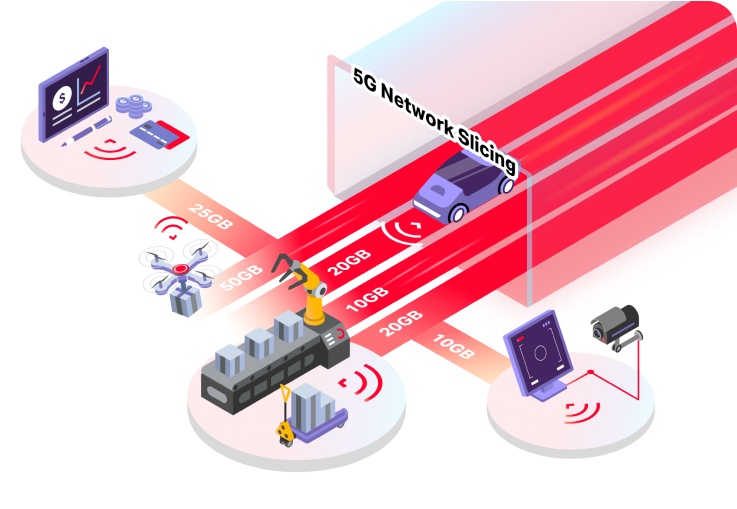
What Is 5G Network Slicing?
nhimg.org
Oct. 3, 2026, 7:05 a.m.
5G network slicing partitions a single physical mobile network into multiple isolated logical networks, each tailored to specific service requirements such as low-latency industrial control, consumer broadband, or IoT connectivity. Unlike traditional VLAN segmentation, slicing operates across radio, transport, and core layers with customized traffic handling, quality of service expectations, security postures, and lifecycle management. This virtualization enables operators to align network behavior with business needs while reducing security blast radius—if one service becomes compromised or misconfigured, slice boundaries help prevent interference with other services sharing the same infrastructure. However, isolation is not automatic; it requires correct policy enforcement, accurate orchestration, and strong separation between shared functions including the control plane and management systems. Slicing proves most valuable when workloads have genuinely different network requirements, such as emergency services, enterprise traffic, and mobile edge computing. Security vulnerabilities emerge when orchestration is weak, management privileges excessive, or shared components fail. A compromised slice manager or exposed management interface can render logical separation ineffective, allowing traffic and control pathways to cross intended boundaries.
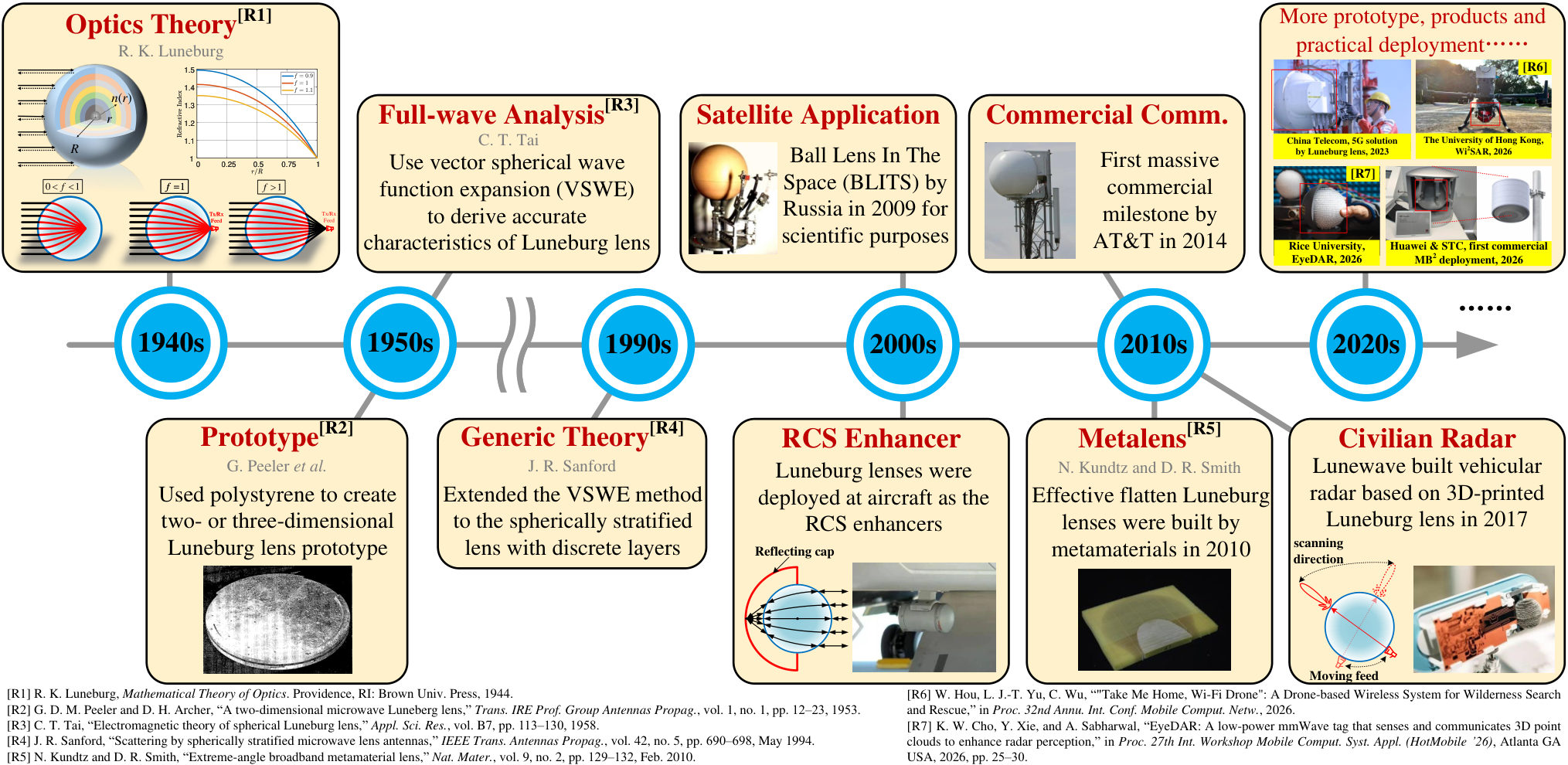
LUNA: Luneburg-Lens-Aided Reconfigurable Array for 6G-and-Advanced Wireless Networks
arxiv.org
Oct. 3, 2026, 7:05 a.m.
LUNA (LUneburg-lens-aided recoNfigurable Array) represents a novel antenna architecture designed to advance sixth-generation wireless networks by unifying multiple-input multiple-output (MIMO) and network-controlled repeater (NCR) functionalities. The system leverages a Luneburg lens—a graded-index dielectric structure that passively converts low-gain feed radiation into highly directional beams without active phase shifting—combined with a dense passive feed bank and reconfigurable feed-selection network for electronic beam steering. This approach minimizes hardware complexity and power consumption while enabling beam direction switching. The article reviews Luneburg lens principles and their historical application in radar and wireless communications, then demonstrates how LUNA-MIMO and LUNA-NCR variants reuse the lens and feed bank across multiple functions and frequency bands. Case studies confirm that LUNA achieves satisfactory spectral and energy efficiency using minimal radio-frequency chains while improving positioning performance for sensing applications. The architecture addresses fundamental limitations of conventional MIMO systems and movable antenna concepts by balancing spatial degrees of freedom with sufficient aperture for array gain, particularly in millimeter-wave and terahertz bands essential for 6G networks supporting integrated communications, sensing, and resilient coverage.
Share on
Big tech trajectories: A layer-model approach to extensions of platform power in the emerging XR economy
policyreview.info
Oct. 3, 2026, 7:05 a.m.
The technology sector is experiencing a significant shift from traditional social media platforms toward immersive extended reality (XR) experiences, encompassing augmented, mixed, and virtual reality technologies. Major corporations including Meta, Google, Apple, Microsoft, Amazon, Tencent, and ByteDance are actively investing in this emerging economy. This article analyzes the material economic conditions shaping the XR landscape and examines how big tech companies' existing platform infrastructures will likely create familiar patterns of concentrated power in this new domain. The authors identify critical regulatory challenges posed by XR's complexity, particularly concerning user manipulation, surveillance, disinformation, and harassment risks as these immersive technologies become increasingly pervasive. To address these governance issues, the researchers propose a layer-model approach designed to manage regulatory complexity in XR platforms. This work contributes to a special issue on governing the metaverse through public sphere analysis, highlighting the urgent need for regulatory intervention as companies pursue making immersive technologies as ubiquitous and essential as smartphones.
Share on

Cryptography for Operating Systems and CPU Architectures
www.safelogic.com
Oct. 3, 2026, 7:05 a.m.
Organizations deploying software across multiple operating systems, runtimes, and architectures face significant challenges in maintaining FIPS 140-3 validated cryptography while preparing for post-quantum security. SafeLogic addresses these complexities through CryptoComply, which delivers FIPS 140-3 validated cryptographic software for regulated products, and SafePQ, which supports post-quantum deployment and hybrid migration strategies. Cross-platform cryptographic integration requires more than code compilation; differences in C libraries, language runtimes, entropy sources, and CPU instruction sets affect performance and compliance status. Critical regulatory developments mandate ESV-certified entropy sources for all NIST FIPS 140-3 submissions and Common Criteria evaluations. Companies must navigate divergent requirements across Java, Go, .NET, and native applications while incorporating NIST-standardized post-quantum algorithms including ML-KEM, ML-DSA, and SLH-DSA, which have different performance characteristics than classical cryptography. SafeLogic's unified approach simplifies multi-platform integration and compliance, enabling organizations to establish consistent cryptographic foundations while managing the transition from classical to post-quantum security standards.
Share on
AI-Native Open RAN: A Roadmap from xApps and rApps to
arxiv.org
Oct. 3, 2026, 7:04 a.m.
# Professional Summary
This paper presents a comprehensive roadmap for integrating artificial intelligence into Open RAN (Radio Access Network) architecture, authored by Ryan Barker, Alireza Ebrahimi Dorcheh, and colleagues. The research addresses the evolution from traditional xApps and rApps—application and RAN applications respectively—toward autonomous network agents capable of intelligent decision-making in wireless networks. The work outlines a progressive framework that leverages AI-native principles to enhance network optimization, resource allocation, and operational efficiency. By establishing a structured pathway from conventional RAN applications to fully autonomous AI agents, the roadmap provides telecommunications stakeholders with strategic guidance on technology adoption and implementation priorities. This research matters significantly as Open RAN represents a pivotal shift toward vendor interoperability and network flexibility, while AI integration promises substantial improvements in network performance, cost reduction, and adaptive capability. The framework bridges current industry capabilities with future autonomous systems, enabling telecommunications operators and vendors to plan investments and development strategies in this rapidly evolving landscape.
Share on

Nokia Is Building a LEO Constellation
sebastianbarros.substack.com
Oct. 1, 2026, 3:32 p.m.
Nokia is putting part of its network business into orbit. Today it announced with ICEYE a secure broadband LEO system that governments can buy, own and operate, with the first communications satellites expected in 2028. ICEYE brings the spacecraft, constellation operations and sovereign customers. Nokia brings communications, secure networking and orchestration.
The business model is the interesting part. Starlink sells access to a constellation owned by SpaceX. ICEYE and Nokia want governments to buy the constellation itself, including the satellites, ground segment and terminals. Nokia therefore does not need to compete for ten million broadband subscribers or match Starlink on cost per gigabyte. It needs a few governments willing to spend heavily for control.
Share on
Starlink Will Have Capacity for 20 Americas by 2030. For Telcos, One Is Enough.
sebastianbarros.substack.com
Sept. 29, 2026, 2:53 p.m.
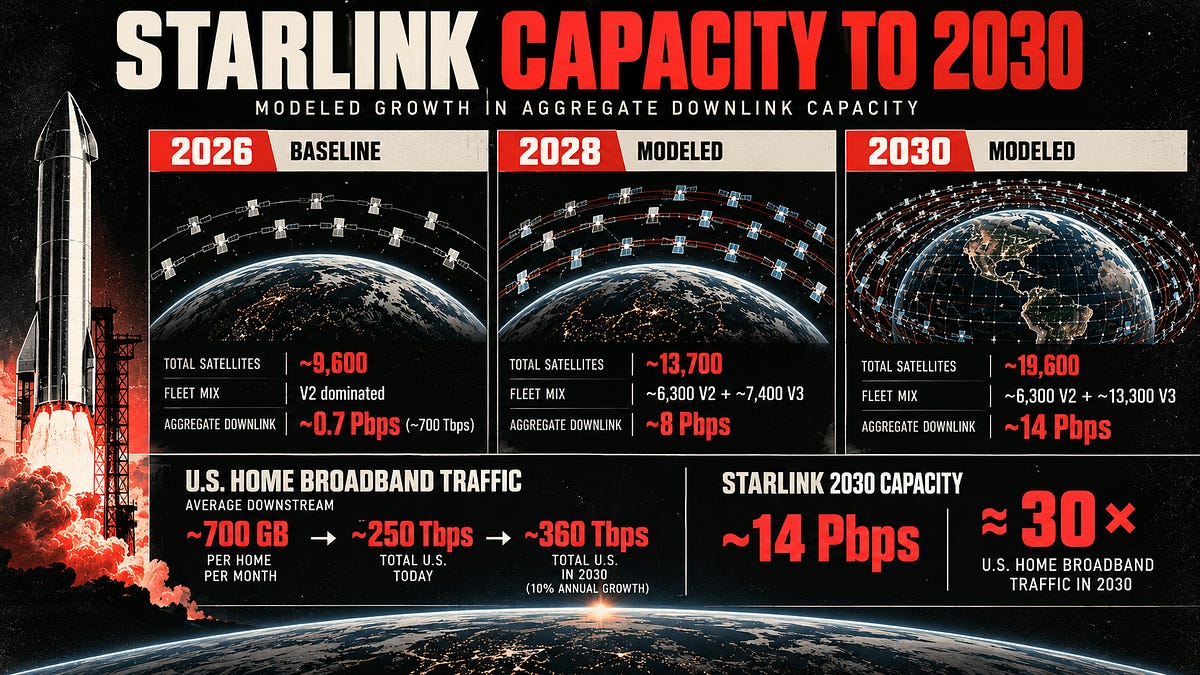
SpaceX had more than 700 Tbps of cumulative Starlink downlink capacity in orbit at the end of Q1 2026. But now, a mature Starship carrying 60 V3 satellites could add another 60 Tbps in a single launch. Put differently, about 12 full Starship loads could provide as much downlink capacity as the entire Starlink constellation did earlier this year.
That is a very different scaling model from the one the telecom industry has watched for the past five years. V3 is designed for 1 Tbps of downlink capacity per satellite, roughly 10 times that of V2. It also increases the number of downlink beams from 192 to 2,048, giving SpaceX much more freedom to reuse spectrum and move capacity toward areas with demand.
Extend that to 2030, and the numbers get large quickly.
Share on

Telcos, Stop Selling Network APIs
sebastianbarros.substack.com
Sept. 27, 2026, 1:51 p.m.
McKinsey surveyed more than 3,000 enterprise technology buyers and found that roughly 80% would rather consume agentic AI through packaged products, managed services or third parties than build everything themselves. Telecom operators also appear among the providers enterprises say they would consider for these services during the next 12 to 18 months, yet McKinsey found no operator with a clearly defined and scalable agentic proposition.
Share on
📡 Open RAN and PON Fiber Access Explained: Disaggregated Radio Networks and GPON to XGS-PON
engineersuniverse.com
Sept. 26, 2026, 7:05 a.m.
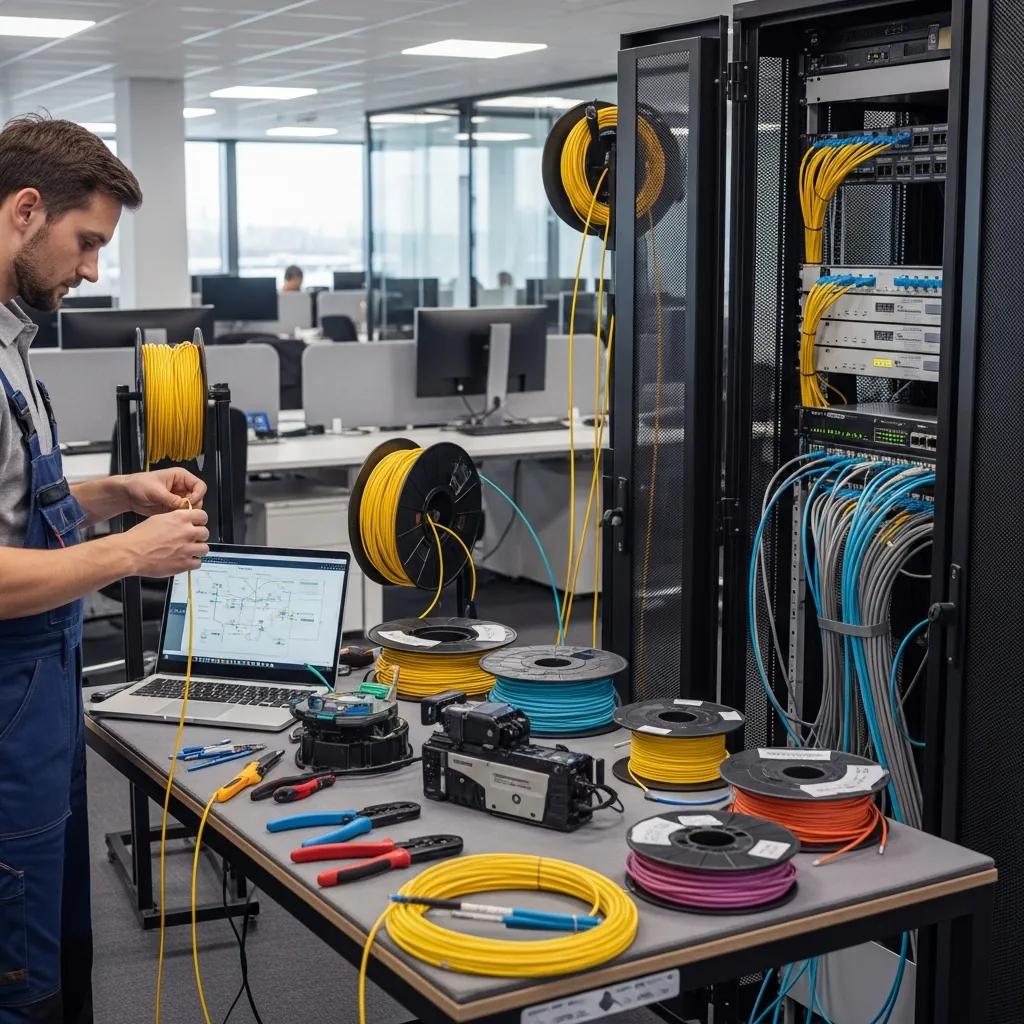
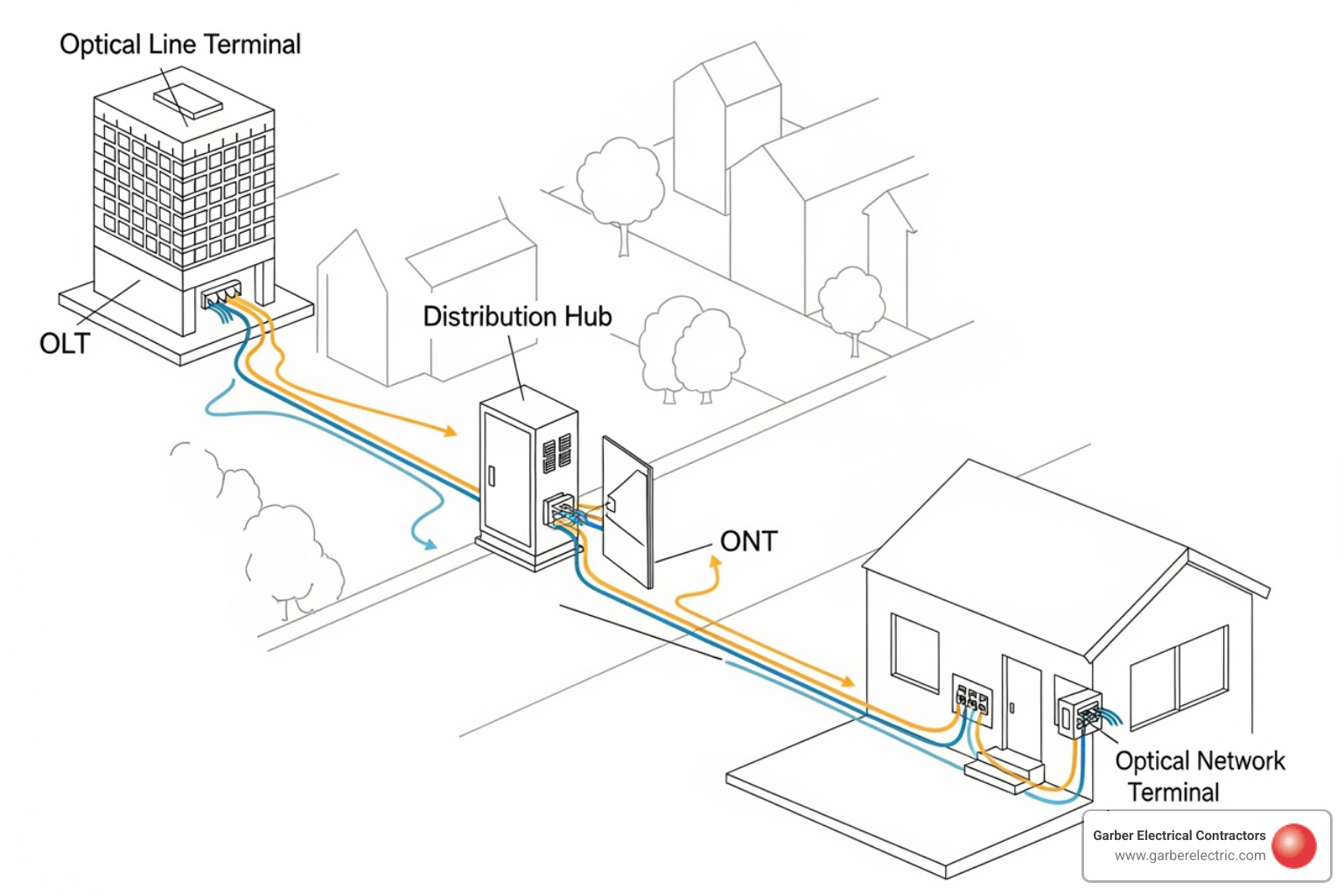
Open RAN and passive optical networking (PON) represent two distinct but complementary structural transformations in telecom infrastructure. Open RAN disaggregates the traditionally vendor-locked radio access network by defining standardized RU/DU/CU interfaces, enabling interoperability between different manufacturers' equipment. The Radio Unit handles RF transmission at the antenna, the Distributed Unit manages time-critical baseband processing near the cell site, and the Centralized Unit handles higher-layer processing remotely. This breaks decades of vertical integration where carriers were locked into single vendors. Meanwhile, PON fiber access—evolving from GPON through XGS-PON to emerging 25G/50G standards—has become the dominant fiber-to-the-home architecture, governing how connectivity reaches from carrier facilities to subscriber premises. Though operating in different network segments, both technologies directly impact RF and telecom engineers today. Open RAN introduces real interoperability trade-offs carriers must navigate, while PON standardization fundamentally reshapes last-mile infrastructure deployment and economics.
Share on
Non Terrestrial Network (NTN
techblog.comsoc.org
Sept. 26, 2026, 7:05 a.m.
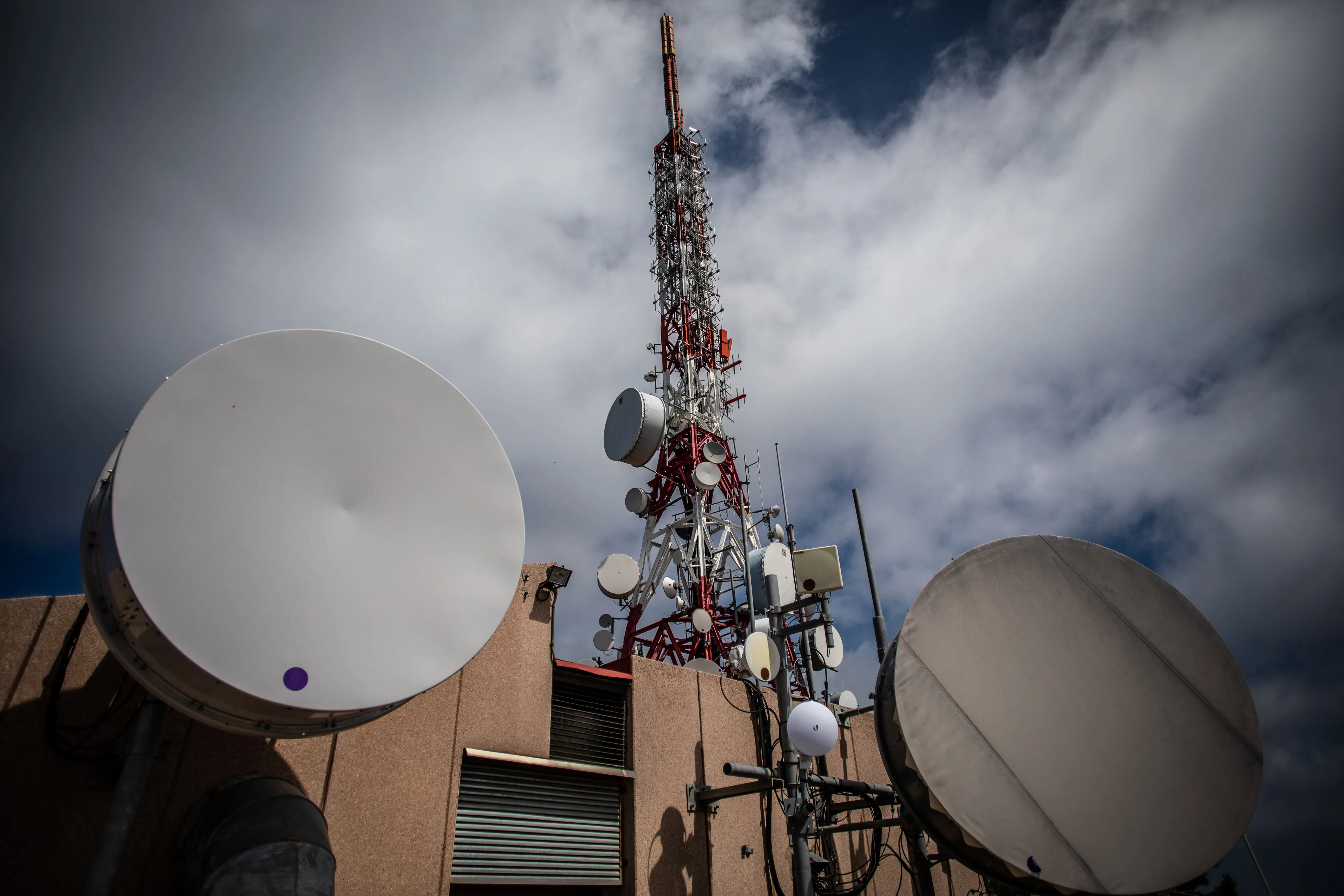
Four major European mobile network operators—Deutsche Telekom, Orange, Vodafone Group, and Telefónica—are in preliminary discussions to form a consortium for jointly bidding on EU-reserved satellite spectrum to launch direct-to-mobile (D2M) services. The European Union's planned 2 GHz mobile-satellite service assignment divides the band into three equal portions: one-third for government and IRIS² infrastructure use, one-third reserved for EU-controlled commercial operators, and one-third open to international bidders. The consortium would target the EU-operator commercial allocation, requiring majority European ownership to meet regulatory requirements. Direct-to-mobile integration leverages 3GPP Release 17 and Release 18 standards across bands n255, n256, and n254, providing the technical baseline for satellite-to-mobile connectivity. This initiative reflects the European Commission's broader "satellite sovereignty" strategy, prioritizing European companies in high-value mobile-satellite spectrum access. While no final consortium decision has been made, this effort demonstrates the telecom industry's strategic alignment with EU policy objectives around technological independence and secure infrastructure development in the satellite communications sector.
Share on
AI-RAN Convergence: From Separate Tracks to an Intelligence Fabric
open-ran.org
Sept. 26, 2026, 7:05 a.m.
The radio access network is undergoing a significant transformation driven by the convergence of three previously separate developments: Open RAN, cloud-native infrastructure, and artificial intelligence. A new report titled "Rethinking the RAN" examines how operators are translating these concepts into practical operating models. The analysis highlights TELUS's brownfield Open RAN transformation, which integrates infrastructure refresh, virtualization, and automation, alongside T-Mobile US's AI-driven network operations approach that connects traditional KPIs with application performance and customer experience. As AI capabilities extend deeper into the radio stack and RAN workloads share distributed infrastructure, orchestration and data architecture become critical. The report projects that future RANs will function as intelligence fabrics dynamically coordinating connectivity, compute, data, and policy rather than static communications infrastructure. This evolution builds upon years of network virtualization and software-defined networking advances. Early AI applications in telecom focused on predictive maintenance and traffic forecasting, but the technology now permeates RAN operations themselves. While the long-term implications extend beyond 5G, identifying near-term business cases that justify investment remains the primary challenge for operators navigating this convergence.
Share on
SoK: Secure Software-Based Multi-Domain Data Segregation
arxiv.org
Sept. 26, 2026, 7:03 a.m.
This systematic review examines the evolution of secure voice communication systems from traditional hardware-based Red/Black architectures toward software-based Multi-Domain Data Segregation (MDDS). As defence, emergency response, and critical infrastructure operations increasingly demand flexible, interoperable, and cost-efficient communication across multiple security domains, this study consolidates research integrating systems security, networking, and cryptography to assess whether software-defined approaches can match hardware-enforced security while meeting modern operational requirements. The review evaluates Software-Defined Networking, Network Slicing, Separation Kernels, and Cross-Domain Solutions while addressing emerging threats through Post-Quantum Cryptography. By synthesizing the shift from physically separated, hardware-centric systems to scalable, software-based alternatives, this framework provides researchers and industry stakeholders with essential guidance for developing next-generation, high-assurance Voice Communication System architectures capable of supporting mission-critical coordination across diverse operational domains securely and adaptably.
Share on
6G Is Being Standardized Backwards
sebastianbarros.substack.com
Sept. 22, 2026, 1:14 p.m.
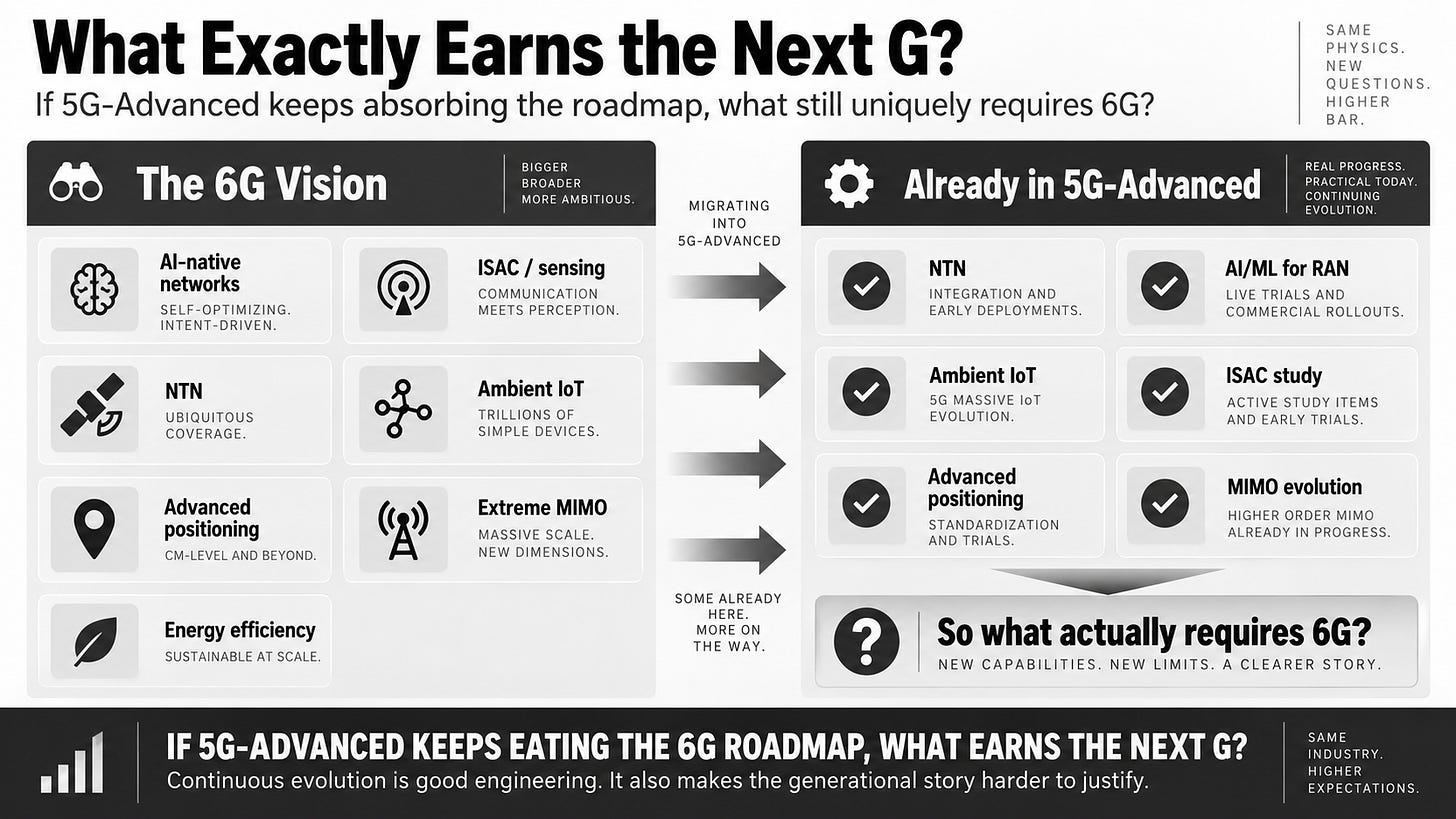
I have been going through the latest 3GPP discussions on 6G, including the outcomes of RAN #113 last week, and I am getting a very familiar feeling. We are still years away from commercial 6G, yet a surprisingly large part of the discussion is already about migration or how to share spectrum with 5G, how much of the 5G architecture to retain, whether 5G and 6G should work simultaneously, and how operators can avoid another expensive network transition.
None of these are stupid engineering questions, but the problem is the order. We seem to be designing the compromises required to make 6G economically deployable before clearly establishing what 6G will do that makes another generation worth deploying. Telecom has done this before, and 5G is a pretty good case study of how a technically successful generation can still end up with a bad reputation.
Share on
SpaceX’s D-Day to Conquer Home Broadband Is Set: Sept. 28
sebastianbarros.substack.com
Sept. 21, 2026, 9:35 p.m.
September 28 may be one of the most important dates in Starlink’s history. Not because Starship flies again, but because SpaceX plans to put 26 operational V3 satellites into orbit and start attacking the one problem Starlink still has not solved.. capacity.
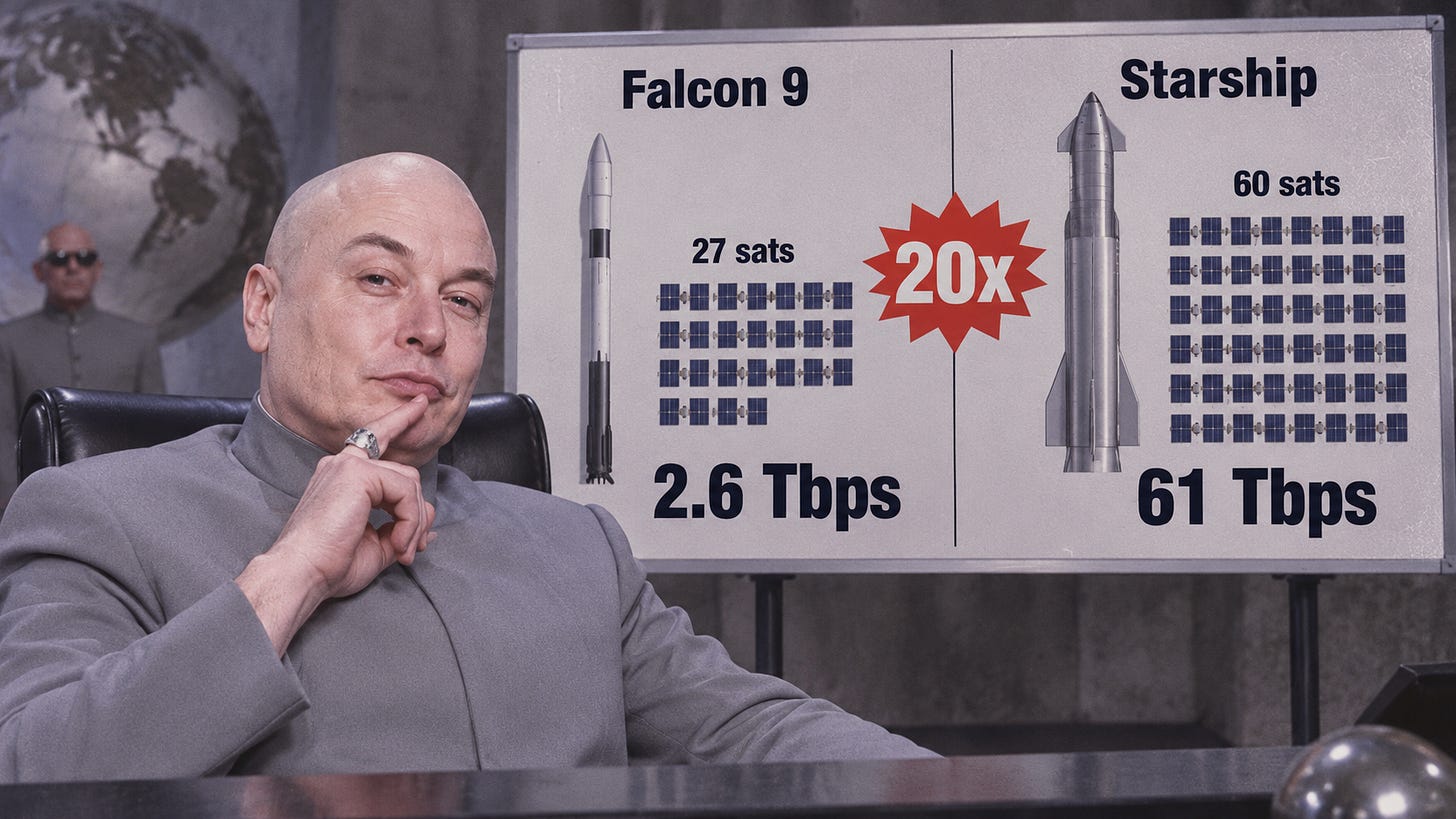
Fixed broadband coverage is basically done. Starlink already has around 12 million subscribers, serves most of the planet, and offers residential plans starting at around $55. The problem is putting enough bits over the places where people actually live. A Falcon 9 Starlink launch adds roughly 2.6 Tbps of downlink capacity. A full Starship with 60 V3s is designed to add around 61 Tbps in a single round; more than 20x per launch.
Share on

Starlink Is Not Better Than Fiber. Customers Don’t Seem to Care.
sebastianbarros.substack.com
Sept. 20, 2026, 8:12 p.m.
Three years ago, if someone had told me that a satellite broadband company would soon be sitting alongside some of the best-rated fiber providers in America in terms of customer experience, I probably would not have believed it. Fiber is simply a better access technology; It has more capacity, lower latency, symmetrical bandwidth, fewer spectrum constraints, and considerably more room for future upgrades. From a pure network engineering perspective, there is no debate.
Yet Starlink is now repeatedly appearing near the top of US broadband customer satisfaction studies, and not just in comparisons against other satellite providers. Customers are comparing the experience with fiber, cable, and fixed wireless, and in several studies Starlink is scoring surprisingly well. Satellite has not become technically superior to fiber.
These results suggest that the technology underlying the connection matters much less to customers than most people in telecom assume.
Share on

What is Open RAN? - Open Radio Access Network Explained
aws.amazon.com
Sept. 19, 2026, 7:04 a.m.
Open RAN (Open Radio Access Network) is a telecommunications architecture that enables hardware and software interoperability in mobile networks through standardized interfaces, contrasting with traditional proprietary RAN systems. By disaggregating the radio access network into interoperable components—the Radio Unit (RU), Distributed Unit (DU), and Centralized Unit (CU)—Open RAN allows operators to source equipment from multiple vendors while leveraging software-based network functions. The RU manages radio frequency processing, the DU handles latency-sensitive operations, and the CU processes non-real-time functions. These components communicate via standardized interfaces defined by the O-RAN Alliance, 3GPP, IEEE, and others, including the Open Front-Haul interface and enhanced common public radio interfaces (eCPRI). Open RAN also separates the control and user planes, enabling independent management and scaling. By employing virtualization layers to run RAN software as cloud-native network functions, Open RAN significantly reduces infrastructure costs, enhances scalability, and provides operators flexibility to deploy, upgrade, and improve their networks without extensive hardware replacement.
Share on
Starlink Will Provide a 5G-Like Experience by 2028... Wait, What?
sebastianbarros.substack.com
Sept. 17, 2026, 11:11 a.m.
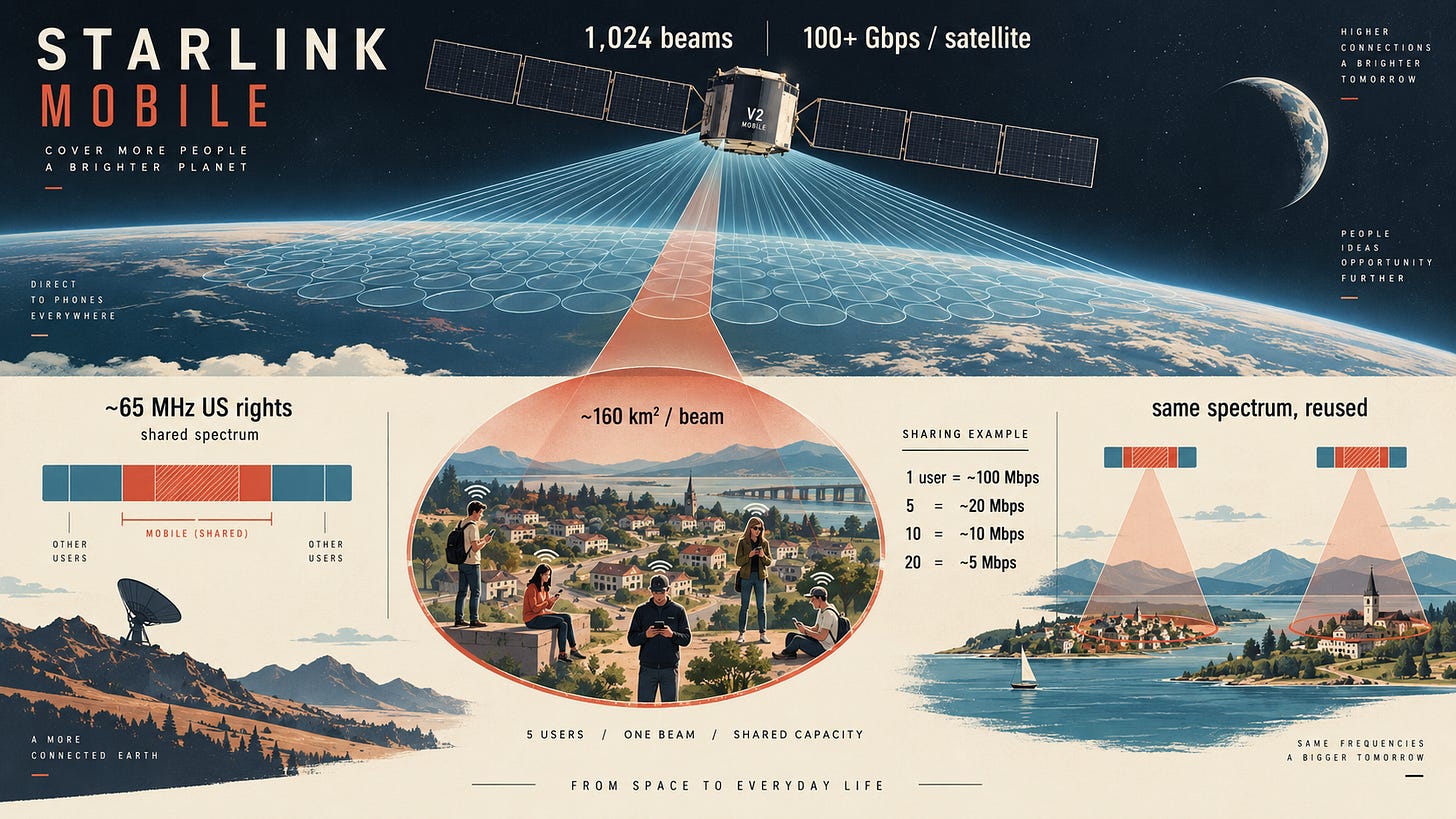
That sounds almost ridiculous when you think about the physics. Your phone transmits with roughly 200 milliwatts through a tiny antenna, while the satellite is moving hundreds of kilometers above your head at orbital speed. Somehow SpaceX wants to turn that into something that feels like 5G.
The interesting part is that the 150 Mbps claim isn’t obviously bullcrap; in fact, the physics can work. Of course, what becomes much harder is maintaining that experience when you add thousands of users, cities, buildings, spectrum constraints, interference, and the tiny uplink coming from your phone.
So yes, Starlink Mobile can deliver 150 Mbps from space. The real question is where, for how many people, for how long, and what SpaceX still needs to build around the satellite network to make “5G quality” mean something in the real world.
Share on

The AI Smartphone Supercycle That Never Came
sebastianbarros.substack.com
Sept. 16, 2026, 10:21 a.m.
For the last few years, smartphone makers have been desperately looking for a new reason to make us upgrade. Better cameras became incremental, 5G stopped being exciting, and foldables never became mainstream. Then AI arrived.
This was supposed to be the next smartphone supercycle.
Instead, something very different happened. GenAI-capable phones went from roughly 36% of global shipments in 2025 to an expected 45% in 2026, yet the smartphone market barely grew 2% last year, and shipments fell 7.4% YoY in Q2 2026. Replacement cycles are now approaching four years.
AI phones are becoming mainstream. AI-driven upgrades are not.
Share on
Telcos as Power Plants?
sebastianbarros.substack.com
Sept. 12, 2026, 8:18 p.m.
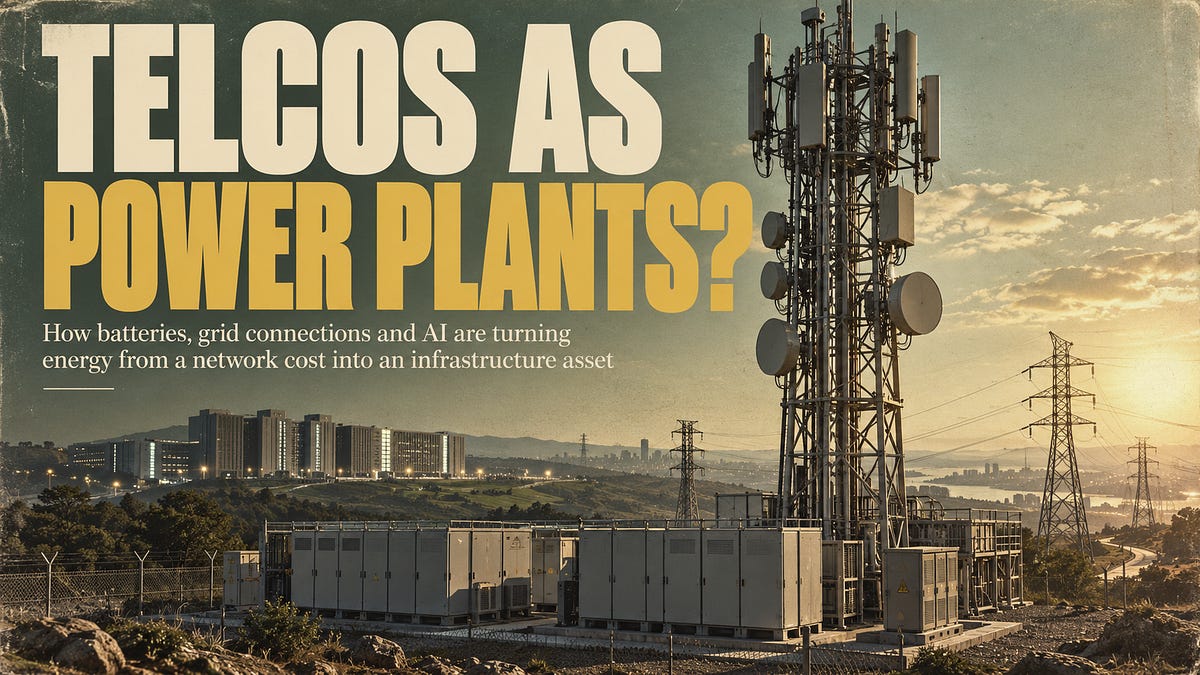
During Verizon’s second-quarter call, Dan Schulman explained that the company is removing old copper equipment from thousands of central offices. That is freeing up buildings that already have power, permits, backup systems, and network connections. Verizon is starting to reuse some of them as small data centers for AI inference, and Schulman said an early trial sold out its available capacity within 24 hours.
Share on

Beyond the Copper Switch-Off: Unlocking the hidden value of existing MDU wiring
genexis.eu
Sept. 12, 2026, 7:04 a.m.
As European operators accelerate copper network switch-offs, replacing legacy infrastructure with fiber, a valuable opportunity is being overlooked. While the industry focuses on transitioning data, voice, and video services to fiber access networks—utilizing Point-to-Point fiber and XGS-PON technology—existing copper telephone pair and coaxial cabling within multi-dwelling units remains untouched and represents significant untapped potential. Rather than becoming obsolete, this in-building copper infrastructure can be repurposed to accelerate fiber adoption, enabling operators to serve homes more efficiently while allowing building owners to modernize properties and increase their value. Residents gain access to Gigabit broadband services without requiring complete rewiring. Historically, copper wiring was associated with legacy services including Plain Old Telephone Service and VDSL2 broadband. However, distinguishing between access network copper and in-building copper infrastructure is critical. As operators retire these services and fiber becomes the primary access technology, the existing wiring becomes newly available for innovative applications. This shift marks a transformative chapter where copper switch-off creates opportunities for leveraging existing infrastructure rather than simply signaling its technological obsolescence.
Share on