Barriers to autonomous vehicles adoption in Europe: Insights from literature and interviews www.sciencedirect.com June 15, 2026, 8:52 a.m.
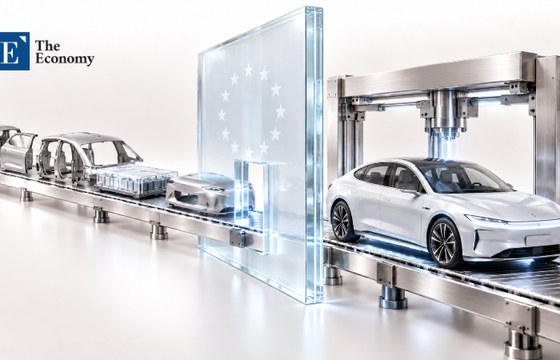
Autonomous driving in Europe faces a multifaceted array of challenges, but our review indicates that these challenges are well-understood and, with concerted effort, can be addressed. The implications of these findings are significant. In the short term, the persistence of regulatory uncertainty, technical limitations, and public scepticism means that fully self-driving vehicles will likely roll out slower in Europe than the most bullish predictions once suggested. Stakeholders must navigate a delicate balance between innovation and caution, since premature deployment could erode trust if incidents occur, whereas excessive delay could cause Europe to fall behind in a transformative industry. In the long term, overcoming these barriers is crucial because the potential benefits of AVs - from dramatically reduced traffic accidents and enhanced mobility for the elderly or disabled, to more efficient logistics and reduced congestion - are substantial. Failure to resolve the impediments could mean foregone benefits in safety and economic efficiency, not to mention Europe’s competitiveness in the global automotive arena.
Stellantis signs Europe joint venture with China's Dongfeng www.france24.com June 15, 2026, 8:50 a.m.
The company announced earlier this month a deal with Dongfeng to build Jeep and Peugeot models for the Chinese market and increase cooperation on technology research and development.Dongfeng and other Chinese carmakers meanwhile are looking to Europe and other export markets as their home market remains tough, with consumer spending slumping.Brands such as BYD, Chery, Geely, Leapmotor, Jaecoo, and XPeng were virtually unknown three years ago in Europe.
Stellantis' China Gamble Could Reshape America's Auto Industry ... carcoachreports.substack.com June 15, 2026, 8:45 a.m.
Stellantis plans to cut more than 800,000 units of manufacturing capacity in Europe while aggressively restructuring global production around efficiency and ...
The world's carmakers are struggling to compete with China www.bbc.co.uk June 15, 2026, 7:56 a.m.
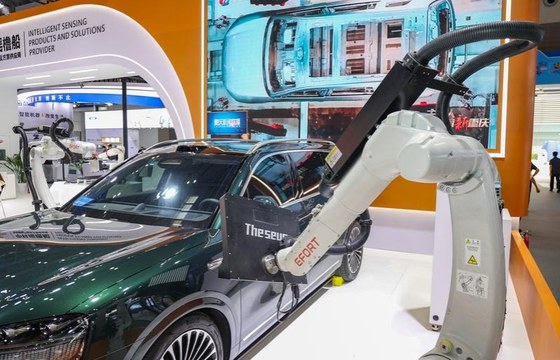
The BBC visited China’s EV factories and found they are dominating the ecosystems shaping the global auto industry.
Volkswagen to cut 19,000 jobs by end of 2026 www.automotiveworld.com June 15, 2026, 7:53 a.m.
Both the 19,000 and 28,000 figures sit within a broader group-wide target of 50,000 job cuts across Germany by 2030, covering the core Volkswagen brand, Audi, Porsche and software subsidiary Cariad. The scale of the cuts reflects the depth of VW’s financial deterioration: operating profit fell 53% to €8.9bn (US$10.3bn) in 2025, net profit dropped 44% to €6.9bn and the group’s operating margin compressed to 2.8%—its worst since the Dieselgate crisis.
California's New AV Rules Open Door to Heavy-Duty Deployment ... www.insideglobaltech.com June 15, 2026, 6:11 a.m.
Significantly, manufacturers must now submit an extensive “safety case” to obtain a permit. A safety case is a document that explains the operation of the AV ...
EU AI Act Explained for Automotive: What Changes for AI Vehicle ... www.automotive-iq.com June 15, 2026, 6:10 a.m.
The EU AI Act represents the European Union's first comprehensive legal framework for artificial intelligence, introducing a risk-based regulatory approach with significant implications for the automotive sector. As vehicles increasingly incorporate AI-enabled technologies—including advanced driver assistance systems, autonomous driving functions, and driver monitoring—automotive OEMs and suppliers face new compliance obligations. The Act extends beyond technology regulation to encompass safety, compliance, and governance frameworks affecting how AI-based vehicle systems are developed, validated, monitored, and documented. Classification of AI systems according to risk levels becomes a critical compliance priority, presenting both regulatory challenges and strategic opportunities for organizations capable of developing trustworthy, transparent AI solutions that meet the Act's requirements.
Renault Twingo, une mini-française électrique développée en deux ans… en Chine www.auto-infos.fr June 10, 2026, 6:26 p.m.
La Twingo sera produite en série dès ce mois-ci sur le site slovène de Novo Mesto. Elle sera disponible en mars 2026 dans ses versions les plus équipées et en juin pour sa déclinaison la moins chère, à moins de 20 000 euros. Un dérivé Nissan et une variante Dacia sous les 18 000 euros arriveront ensuite ! Au-delà du produit, cette nouvelle citadine marque une vraie révolution copernicienne pour Renault ! Car elle aura été conçue en « deux ans seulement, contre trois à quatre ans habituellement », affirme Olivier Laik, directeur du programme des petits véhicules chez Renault. Un temps de développement record, qui permet de réduire les coûts totaux de 20 à 30% par rapport à un projet conventionnel, selon les divers calculs de la firme de Boulogne-Billancourt.
Bosch Center for Artificial Intelligence www.bosch.com June 8, 2026, 9:25 a.m.
The Bosch Center for Artificial Intelligence (BCAI) serves as Bosch’s center of excellence, dedicated to integrating cutting-edge AI technologies into the company's products and services to create solutions truly “Invented for life.” By leveraging Bosch's vast domain expertise and world-class AI methods, BCAI actively spearheads applied AI projects from initial concept to implementation, bridging the gap between fundamental research and real-world applications. With a strong focus on skills, agility, and openness, BCAI teams, comprising domain experts, data professionals, and software engineers from diverse international backgrounds, are at the forefront of AI research and application.
Building Intelligence That Can Act in the World wayve.ai June 8, 2026, 6:27 a.m.
We believe intelligence that cannot act in the physical world is incomplete. The next frontier of AI is not only to understand information, but to operate safely and intuitively in the real world. It will be defined by systems that can perceive, reason, learn, and make decisions safely in dynamic physical environments. Systems that understand uncertainty, causality, motion, interaction, and consequence.That requires a different set of problems to be solved: world models that support action, representations grounded in space and physics, policies that adapt under uncertainty, and learning systems that improve through interaction with reality rather than passive observation alone.This is the challenge of embodied AI.
The Future of Autonomous Vehicles: Market Predictions for 2030 ... patentpc.com June 8, 2026, 6:10 a.m.
The autonomous vehicle market is poised for transformative growth through 2030, with projections indicating a global market value reaching $2.1 trillion. Industry experts anticipate a robust compound annual growth rate of 22-25% from 2024 to 2030, driven by technological advancements in artificial intelligence, machine learning, and sensor technology. By 2030, approximately 60% of newly sold vehicles are expected to feature Level 2 autonomy capabilities. This expansion presents substantial opportunities across automotive manufacturing, software development, insurance, and logistics sectors. Businesses should strategically position themselves by establishing partnerships with autonomous vehicle technology providers, investing in research and development, and developing complementary services in smart infrastructure and fleet management. Companies that fail to engage with this technological shift risk competitive disadvantage in an increasingly autonomous-focused automotive landscape.
This Week in AV News: Week of May 11 www.thedriverlesscommute.com June 8, 2026, 6:10 a.m.
This week in autonomous vehicle news highlights significant regulatory developments shaping the industry's future. Federal investigators are probing crashes involving autonomous vehicle startup Avride in Texas, underscoring heightened scrutiny of safety performance and deployment practices as AV operations expand beyond controlled pilot programs. Meanwhile, Washington DC's Metro system is exploring full automation of its Red Line trains, potentially representing one of the first large-scale driverless heavy-rail transit deployments in the United States. Transit officials suggest automation could enhance train frequency, operational consistency, and reliability while reducing costs. Additionally, Alaska is advancing autonomous vehicle legislation. These developments collectively demonstrate how federal oversight and regulatory frameworks are increasingly shaping operational standards across passenger and delivery-focused autonomous systems as the technology matures.
California's New AV Rules Open Door to Heavy-Duty Deployment ... www.globalpolicywatch.com June 8, 2026, 6:10 a.m.
California's Department of Motor Vehicles finalized comprehensive autonomous vehicle regulations on April 28, 2026, establishing the state's first pathway for testing and deploying heavy-duty autonomous vehicles exceeding 10,000 pounds. The regulations introduce rigorous permitting, safety-case, reporting, and enforcement requirements for all AV manufacturers while maintaining separate requirements for robotaxi operators. Though heavy-duty passenger transport AVs remain prohibited, the rules represent a significant milestone for AV trucking companies seeking access to California's substantial market. The framework provides industry clarity through detailed compliance requirements and tiered permitting for testing and commercial deployment. However, legal challenges from the California Teamsters and opposition from state and federal policymakers threaten implementation, potentially influencing AV regulatory approaches nationwide.
Here at Last: The Evolution of the Robotaxi www.bcg.com June 7, 2026, 9:43 a.m.
While they may not represent the revolution many predicted, autonomous taxi fleets are rolling out in more cities and becoming a promising urban mobility option. A BCG analysis estimates that the global robotaxi fleet could range between 700,000 to 3 million vehicles by 2035 and that fares in some markets will be lower than traditional ride-hailing services.The speed of deployment will be influenced by the costs of entering new markets, the time needed to scale up, consumers’ willingness to embrace robotaxis, and the degree to which they capture share from other transportation modes. To win in this increasingly competitive market, operators will need patience and years of substantial investment. They’ll also need to navigate complex regulatory, operational, and technological challenges.
Robotaxi Networks Expand to More Cities as Commercial Operations ... www.dispatch.com June 6, 2026, 1:19 p.m.
Robotaxi networks are experiencing significant expansion into additional cities as commercial operations advance across the United States. This growth reflects increasing confidence in autonomous vehicle technology and its market viability. Companies are scaling their fleet operations to serve broader geographic regions, marking a pivotal moment in the transportation industry's evolution. As robotaxi services become more accessible, they promise to reshape urban mobility, reduce transportation costs, and address congestion challenges. The expansion demonstrates that autonomous vehicle technology has progressed from experimental phases into practical, revenue-generating operations that attract substantial investment and consumer interest.
Stellantis Accelerates AI-led Strategy and Digital Transformation Through ... www.stellantis.com June 6, 2026, 1:16 p.m.
Stellantis has announced a strategic five-year collaboration with Microsoft to accelerate its digital transformation and AI-driven innovation. The partnership will focus on co-developing over 100 AI initiatives spanning sales, customer care, and operations across the automotive company's global ecosystem. Key initiatives include strengthening cybersecurity defenses with AI-powered analytics to protect vehicles and operations, and modernizing cloud infrastructure to reduce datacenter footprint by 60% by 2029. By combining Stellantis' automotive engineering expertise and multi-brand scale with Microsoft's cloud and AI capabilities, the collaboration aims to enhance customer experiences and drive operational agility across the organization.
The Rise of the Software-Defined Vehicle: Architectures, Enabling ... arxiv.org June 6, 2026, 1:13 p.m.
Software-Defined Vehicles represent a fundamental paradigm shift in automotive design, transitioning from hardware-centric to software-centric platforms capable of dynamic adaptation and continuous evolution. This comprehensive survey examines SDV architectures, enabling technologies, and operational frameworks, tracing the evolution from distributed electronic control units to centralized computing platforms. The paper reviews critical technologies including service-oriented software architectures, middleware, artificial intelligence, and cloud-based infrastructures, while introducing a structured taxonomy organizing SDV technologies across functional hardware, electrical-electronic architectures, software frameworks, automation mechanisms, and distributed infrastructure. Additionally, the study explores the Software-Defined Internet of Vehicles paradigm, integrating software-defined networking with edge and fog computing to enable scalable vehicular communication, while addressing cybersecurity and interoperability challenges inherent to modern connected vehicles.
Artificial intelligence and EVs – Analysis www.iea.org June 6, 2026, 1:11 p.m.
The International Energy Agency examines the symbiotic relationship between artificial intelligence and electric vehicle development. AI and advanced computing capabilities are disproportionately benefiting EVs, particularly in autonomous driving and integrated vehicle control systems. The stable, high-voltage power supply inherent to EV batteries creates an ideal environment for sensor and chip integration. While AI benefits extend beyond EVs to hybrid vehicles and general automotive design optimization, autonomous vehicle advancement fundamentally depends on machine learning algorithms and computational power. Modern autonomous vehicles employ diverse sensor arrays including cameras, radars, and lidars to create comprehensive environmental awareness, leveraging sophisticated AI techniques and neural networks that can navigate real-world driving complexity far beyond the limitations of earlier rule-based systems confined to test tracks.
Digital Twin Technology in Autonomous Systems autonomoussystemsauthority.com June 6, 2026, 1:10 p.m.
Digital twin technology has emerged as a critical infrastructure component in autonomous systems development, serving essential functions throughout design, validation, and operational phases. A digital twin represents a continuously synchronized virtual replica of a physical autonomous platform, encompassing sensors, actuators, control logic, and environmental interactions. Originally formalized by NASA in 2012, this technology spans multiple classification types, including geometric and kinematic twins for collision modeling and path planning, as well as physics-based twins for simulating complex behaviors and predictive maintenance. Digital twins directly support simulation, testing, safety certification frameworks, and real-time operational intelligence across ground, air, and industrial autonomous systems. By enabling continuous synchronization between virtual and physical platforms throughout the system lifecycle, digital twins facilitate enhanced validation procedures, reduce operational risks, and optimize maintenance strategies across diverse autonomous applications.
Samsung's Silver-Carbon Solid-State Battery www.miningvisuals.com June 1, 2026, 9:05 a.m.
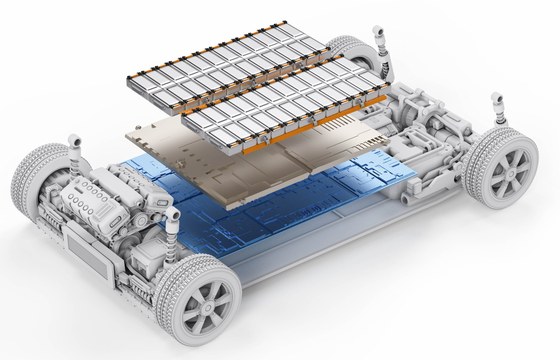
Samsung is advancing solid-state battery technology with an innovative silver-carbon composite anode designed to address critical limitations of conventional lithium-ion batteries. The company's breakthrough involves a five-micrometer silver-carbon nanocomposite layer that suppresses dendrite formation—needle-like lithium structures that cause battery degradation and safety issues. This silver-stabilized architecture enables Samsung's "anode-less" design, achieving significantly enhanced performance metrics including 900 Wh/L energy density, 600-mile vehicle range, and nine-minute fast charging capabilities. With mass production targeted for 2027, this development signals a transformative shift in energy storage technology and introduces silver as a critical material in the evolving EV supply chain, positioning Samsung SDI as a leading innovator in next-generation battery solutions.